Start Here ...

Showing posts with label Rethinking Hell. Show all posts

Sunday, February 27, 2022

Chris Date and Rethinking Hell Should Rethink Jesus


Foremost annihilationist, and frequent debater, Chris Date makes a startling admission concerning one of his debate tactics when discussing the salvation of all (which he vehemently denies).

Rethinking Hell contributor Chris Date teaches eternal death for those who are not saved. The problem for him, and his false teaching, is that ALL have been saved by the death and resurrection of Jesus. John 3:17,

For God does not dispatch His Son into the world that He should be judging the world, but that the world may be saved through Him.

And John 1:29,

On the morrow [John the Baptist] is observing Jesus coming toward him, and is saying, "Lo! the Lamb of God Which is taking away the sin of the world!
It takes God-given faith to believe that He was actually successful. God's Son is the Successful Savior! Damn straight!

It's time for those at Rethinking Hell to Rethink Jesus.

Tuesday, August 18, 2020

The ends of the 4 Christian hells, Part 3

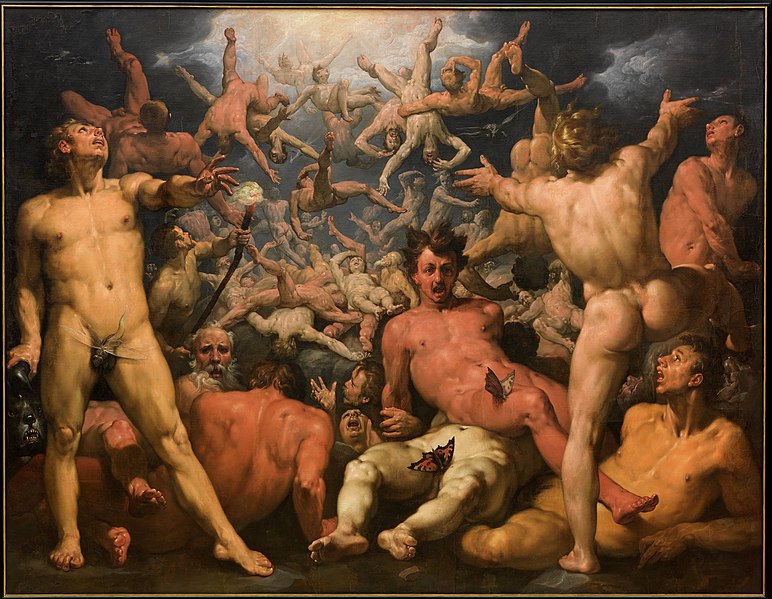
File:Cornelis Cornelisz. van Haarlem - The Fall of the Titans - Google Art Project.jpg
The Fall of the Titans
An ancient Church Lady, who is a good friend of mine, read my book, Jesus and Hitler shortly after I released it. She didn't agree with the main fact of the book—the salvation of all through Christ. She said, "You should have written more about hell." I did write quite a bit about judgment, because the Scriptures have a lot to say about judgment. But hell? The Scriptures say nothing about the traditional beliefs on hell, which are still very popular (and based on mistranslated bibles, with all of their eternals and everlastings). The topic of judgment is not nearly as tantalizing as the topic of hell. "Hell" is an attention grabber, no doubt. Why do you think I've use the word hell in the titles of this series of posts?

There is a site on the www called Rethinking Hell that is operated by spouters of annihilationism (aka conditional immortality). They utilize a lot of fire-filled images to set the mood. They do "rethink hell" a little bit, in that they oppose the false traditional Christian teaching of eternal conscious torment (ECT) for unbelievers. But, when all is said and done, they offer to the world the same tiny Jesus as ECT, but on a different colored plate. Instead of eternal conscious torment for billions of unbelievers, the annihilationists offer up eternal death for the same billions. Different? Yes. Better? Hell no. Both are false doctrines proclaiming that Jesus saves only a minority fraction of humanity. What they need to do is spend their time "Rethinking Jesus," not "Hell." Stay far away from them.


Recap of Part 2 - Gehenna


In Part 2 we looked at the second Christian hell, Gehenna (Greek geenna). It is one of three, yes, three (3), different locations translated as hell in the Authorized King James Version (AKJV). The other two are sheol/hades, and today's guest, Tartarus. "I'd like you to meet my son, George, my other son, George, and my daughter, George." Yeah, right.

Gehenna is a valley just outside of Jerusalem. It will be a location that is used as a dumping ground for the dead bodies of those who rebel against God. It will be kindled during the millennium and used by Christ as He and His earthly government rule with an iron club from Jerusalem. There will be worms. There will be fire. However, we saw that Gehenna's duration is not everlasting. The valley, with all of its putrid sights and smells, ends when the current earth is done away with just before the great white throne judgment. The new earth will have no need for Gehenna, since, after the great white throne judgment, all of the dead are held in the lake of fire/the second death during the final eon. They will be there until the victorious Christ finally annuls death and vivifies all (1 Corinthians 15:20–28).


Christian Hell #3: Tartarus


For some reason, whenever I see and hear the word Tartarus I crave a fish sandwich. I like fish sandwiches.

Anyway.

We read of Tartarus only one time in the Scriptures. The apostle Peter lays down some heavy-duty teaching in 2 Peter 2:1–9 concerning judgment (not hell),
Yet there came to be false prophets also among the people, as among you also there will be false teachers who will be smuggling in destructive sects, even disowning the Owner Who buys them, bringing on themselves swift destruction. 2 And many will be following out their wantonness, because of whom the glory of the truth will be calumniated, 3 and in greed, with suave words, they will traffic in you, whose judgment of old is not idling, and their destruction is not nodding. 4 For if God spares not sinning messengers, but thrusting them into the gloomy caverns of Tartarus, gives them up to be kept for chastening judging; 5 and spares not the ancient world, but guards Noah, an eighth, a herald of righteousness, bringing a deluge on the world of the irreverent; 6 and condemns the cities of Sodom and Gomorrah, reducing them to cinders by an overthrow, having placed them as an example for those about to be irreverent: 7 and rescues the just man, Lot, harried by the behavior of the dissolute in their wantonness 8 (for the just man dwelling among them, in observing and hearing from day to day, tormented his just soul by their lawless acts), 9 the Lord is acquainted with the rescue of the devout out of trial, yet is keeping the unjust for chastening in the day of judging

Peter used a subject that was well-known in his time to get his point across—Tartarus. But he didn't use the noun Tartarus. He used the verb form—tartarōsas. The CLNT translates this one word as "thrusting them into ... Tartarus" (in yellow above). The sinning messengers were tartarused.

Peter tells us in this passage,
  • in the past there were false prophets among the people (v.1)
  • destructive false teachers will be coming in among you, even disowning Christ (v.1–3)
  • these false teachers will be judged and destroyed (v.3)
  • Peter gives us three examples of God proving that He is willing and able to judge and destroy:
  1. the sinning messengers (Greek angelon) (v.4)
  2. the flooding of the entire ancient world of Noah (v.5)
  3. Sodom and Gomorrah (v.6)
  •  The Lord is "keeping the unjust for chastening in the day of judging" (v.9) in two ways:
      1. The mortal are kept in death in hades/sheol
      2. the immortal sinning messengers are kept in Tartarus
We have many scriptural details about judgments 2 and 3 concerning Noah and Sodom. But God gives us very little concerning His dealing with the sinning messengers. (You get what you get, and you don't throw a fit.)


Jude and Peter jive on Tartarus


In Jude 4–7, he lays out some of the same truths as Peter did,
For some men slip in who long ago have been written beforehand for this judgment; irreverent, bartering the grace of our God for wantonness, and disowning our only Owner and Lord, Jesus Christ. 5 Now I am intending to remind you, you who once are aware of all, that the Lord, when saving the people out of the land of Egypt, secondly destroys those who believe not. 6 Besides, messengers who keep not their own sovereignty, but leave their own habitation, He has kept in imperceptible bonds under gloom for the judging of the great day. 7 As Sodom and Gomorrah and the cities about them in like manner to these committing ultra-prostitution, and coming away after other flesh, are lying before us, a specimen, experiencing the justice of fire eonian. (CLNT)

And these sinning messengers were visited by Christ Himself after He was vivified. 1 Peter 3:18–20,

seeing that Christ also, for our sakes, once died concerning sins, the just for the sake of the unjust, that He may be leading us to God; being put to death, indeed, in flesh, yet vivified in spirit, 19 in which, being gone to the spirits in jail also, 20 He heralds to those once stubborn, when the patience of God awaited in the days of Noah while the ark was being constructed, in which a few, that is, eight souls, were brought safely through water

Put the puzzle together


Understanding the Scriptures as a whole is like putting a puzzle together. After all the individual facts are laid out in front of us, usually from different parts of Scripture, we can then piece them together to see the fuller image. Let's lock together the details of the scriptural Tartarus.
    2 Peter 2:4
    • God didn't spare (treat leniently) the sinning messengers (Greek angelon)
    • He thrust them into Tartarus
    • There are gloomy caverns in Tartarus
    • They are kept in Tartarus for chastening judging
    Jude 6
    • The messengers kept not their own sovereignty
    • They left their own habitation
    • The Lord keeps them in imperceptible bonds under gloom
    • They are kept for the judging of the great day
    1 Peter 3:18–20
    • Christ, after being vivified, went to the spirits in jail
    • Christ heralded to those who were once stubborn

    Truths within the myth


    Without getting too deep into Greek mythology because ... mythology ... we should try to understand why Peter is using the verb tartarōsas in the God-inspired Scriptures (2 Timothy 3:16). By doing this, is he condoning every aspect of the Greek myths? No.

    Peter says in 2 Peter 1:16, "For not by following wisely made myths do we make known to you the power and presence of our Lord, Jesus Christ, but by becoming spectators of His magnificence." Peter assures us that he is getting his information firsthand from Christ, not from any myths, no matter how wisely woven they be.

    In the Greek myths there are a lot of varying details about Tartarus. There is a place called Tartarus, and there is a god called Tartarus. Titans/gods are held in Tartarus. If you're curious, you can sift through the www to find all kinds of information on Tartarus.

    We've just seen the details of the scriptural Tartarus. And Peter uses the familiarity of the well-known myth to get his point across. It's as if Peter is saying to his readers, "Hey, you've heard of the Greek myth of Tartarus. Well, the Lord is dealing with the sinning messengers like that. Let me give you a few facts about that place."

    According to the Greeks, Tartarus is a dark, deep abyss located far below hades. We can see two points of agreement here between the Scriptures and the myth. 1. The Greeks say Tartarus is dark, the Scriptures say it is gloomy. 2. The Greeks, like the Scriptures, say that hades and Tartarus are two distinct places. But, sadly, the AKJV, and other bad bible versions, translate hades and Tartarus as hell, and blurr this key distinction. This leads to false ideas about hades, Tartarus and hell. (Have you met the 3 Georges?)

    We are so used to mortality and death that it's hard for us to imagine immortality and no death. God has created mortals and immortals, thus He needs ways to deal with each kind when they've been naughty. This brings us to a third point of similarity between the myth and the Scriptures. 3. In the Greek myth, Tartarus was a type of jail for supernatural, immortal beings. This also is the teaching of the Scriptures. As we already saw, God holds mortal baddies in death until their judgment. Tartarus is the place where He holds the immortal baddies until their judgment.

    And, while we're on the subject of myths, let's be clear that Tartarus is in no way hell. Any teacher or bible translation that promotes the equation Tartarus = hell is irresponsible, and has altered God's words.


    God's prisons


    God has an elaborate prison system during the eons while sin and death are still operating. There is Tartarus. In Revelation 20:13, at the great white throne judgment, the sea, death (the first death) and hades/sheol all "give up the dead" in them. Satan will be bound in the submerged chaos for the thousand years, then released (Revelation 20:1–3; see also Revelation 9, 11:7, 17:8 and Luke 8:27–33). The lake of fire will hold both mortals and immortals—the immortals for torment, and the mortals in death (the second death) (Revelation 19:20, 20:10–15).

    Let's note that not all immortal baddies are currently in jail. Satan has not been tartarused. He is moving around doing what he was created to do—bad stuff. He is not part of the group that left their habitation. He is not a fallen angel, as Christianity teaches. And there are demons running amok. God tartarused the sinning messengers (and maybe only one particular group of sinning messengers), not Satan or demons.


    The judging of the great day


    The sinning messengers are kept in Tartarus for "chastening judging ... of the great day" (2 Peter 2:4 and Jude 6). In 2 Peter 2:4–8 Peter tells us about the sinning messengers, the flood victims, and Sodom. In verse 9 he says the Lord, "is keeping the unjust for chastening in the day of judging." Peter places all three groups in the same day of judging. Since the Scriptures are clear that the judging of the mortal baddies takes place at the great white throne, it seems that this is when the sinning messengers are also judged (Revelation 20:11–15).

    In 1 Corinthians 6:2–3, Paul tells the believers,
    Or are you not aware that the saints shall judge the world? And if the world is being judged by you, are you unworthy of the least tribunals? 3 Are you not aware that we shall be judging messengers, not to mention life's affairs? 
    The saints of God—those set apart by Him—will work with Christ in the judging of the world and the judging of messengers (Greek angelous).


    The results of the judging


    All of God's judgings are on the road to the goal. None of His judgings are the goal, despite what eternal tormentists and annihilationists teach. (Please, do not listen to those people.)

    So, what about these sinning messengers? What is their end? Let's look at some of God's goals. Colossians 1:15–20,
    [Christ Jesus] is the Image of the invisible God, Firstborn of every creature, 16 for in Him is all created, that in the heavens and that on the earth, the visible and the invisible, whether thrones, or lordships, or sovereignties, or authorities, all is created through Him and for Him, 17 and He is before all, and all has its cohesion in Him. 18 And He is the Head of the body, the ecclesia, Who is Sovereign, Firstborn from among the dead, that in all He may be becoming first, 19 for in Him the entire complement delights to dwell, 20 and through Him to reconcile all to Him (making peace through the blood of His cross), through Him, whether those on the earth or those in the heavens.
    And Philippians 2:9–11,
    Wherefore, also, God highly exalts [Christ], and graces Him with the name that is above every name, 10 that in the name of Jesus every knee should be bowing, celestial and terrestrial and subterranean, 11 and every tongue should be acclaiming that Jesus Christ is Lord, for the glory of God, the Father.
    And 1 Corinthians 15:20–28,
    Yet now Christ has been roused from among the dead, the Firstfruit of those who are reposing. 21 For since, in fact, through a man came death, through a Man, also, comes the resurrection of the dead. 22 For even as, in Adam, all are dying, thus also, in Christ, shall all be vivified. 23 Yet each in his own class: the Firstfruit, Christ; thereupon those who are Christ's in His presence; 24 thereafter the consummation, whenever He may be giving up the kingdom to His God and Father, whenever He should be nullifying all sovereignty and all authority and power. 25 For He must be reigning until He should be placing all His enemies under His feet. 26 The last enemy is being abolished: death. 27 For He subjects all under His feet. Now whenever He may be saying that all is subject, it is evident that it is outside of Him Who subjects all to Him. 28 Now, whenever all may be subjected to Him, then the Son Himself also shall be subjected to Him Who subjects all to Him, that God may be All in all.
    These three passages are all-encompassing. Christ's victory is all-encompassing. Who, tell me, is left out? Satan has deceived those in Christianity so thoroughly that they can read these passages and still proclaim a puny Jesus who just can't get the job done, try as He might. Their Jesus is a failure.

    Believe the Scriptures, not tradition. Not the ancient Church Lady. Not those who say they believe, but believe only in another, teeny-weeny Jesus.

    Even Satan, our prickly Adversary, is included in Christ's victory. His judgment in the lake of fire is not everlasting. Revelation 20:10,
    And the Adversary who is deceiving them was cast into the lake of fire and sulphur, where the wild beast and where the false prophet are also. And they shall be tormented day and night for the eons of the eons. (CLNT)
    The words "for the eons of the eons" are nowhere near everlasting. Satan will be in the lake of fire only during the latter part of the next eon (which includes the millennium), and the new heaven and earth eon. These are the final two eons—"the eons of the eons"—the greatest eons. These are the eons when Christ reigns. It is at the consummation of these when Christ annuls death and subjects all, including Himself, to God (see 1 Corinthians 15 above). You can learn more about the eons here.


    The end of Tartarus, the 3rd Christian hell


    After the sinning messengers are taken from Tartarus to the judgment, there will be no need for the jail holding the immortals. Just as the sea, hades and the first death are done away with after they give up the dead they hold (Revelation 20:11–21:1), so will Tartarus be done away with after it is emptied.

    No one can say for sure where Tartarus is. If Tartarus is on, or in, the earth, it will be destroyed when the current earth is destroyed. If it is somewhere in the heavens, they too, will be destroyed to make room for the new, in which righteousness is dwelling (2 Peter 3:7–13).

    Bye-bye Tartarus (aka Christian hell #3)!

    Sunday, August 2, 2020

    The ends of the 4 Christian hells, Part 2 (long version)

    Dante and Virgil wager on vampire pro wrestling in hell
    "Hell's bells, Mary!"

    "Hell if I know!"

    "What the bloody 'ell is goin' on in 'ere?"

    "We had one hell of a time in Vegas!" 

    The word hell is woven into our language in rather creative and unexplainable ways. Why the hell do we use the word hell so often, even when we're not talking about hell? "Hell if I know." But there it is, right on the tip of our tongues, ready for duty to infuse a little spice and fire into our communication.

    But, the word hell is also used when hell is the topic of discussion. When this happens, what thoughts of hell invade your head? Are they clear? Foggy? Any visions of nude vampire wrestling? When someone blasts you with, "Rot in hell, muleface!" do you get a distinct vision of the destination?

    Where did your concept(s) of hell come from? My concepts of hell used to come from a mix of the bible (a poorly translated bible), various religions, tradition, art, Hollywood, hell-fire preachers, etc. The biggest influences on me were the visuals of Hollywood and art. Who can forget the sight of Pinhead from the Hellraiser movie franchise? And Spawn? Remember Spawn? These ideas scared the crud out of me. I had horrible visions of my dead loved ones being tormented forever in these depictions of hell. And I was tormented simply by imagining their torment. Ever had that?

    But now (thank God for now), after realizing the truth through the Scriptures (thank God for the Scriptures), I have no tormenting thoughts of hell. None. "Why do thoughts of hell no longer torment you?" you may ask. I reply, "Because I now realize that hell, as commonly known and taught by religion, whether Christian, Buddhist, Muslim, Hindu or any other sect or person, is a myth." Because of God, my mind is now fixed on reality, not unicorns and hell.

    Try to imagine if use of the word hell was outlawed, and we were forced to use the actual words from the Scriptures (you know, the ones that were good enough for God to use): "Gehenna's bells, Mary!" "We had a sheol of a time in Vegas." "Hades if I know!" That'd take some getting used to. But fun would be had by all. Yes, the truth is fun.


    Recap of Part 1: the helling of hell


    In Part 1 of this series we looked at hades/sheol, which is the unseen. It's where the souls of the dead go. While there, they are the dead-dead, not the living-dead. That means the dead are not experiencing anything; no torment for the baddies, and no bliss for the goodies (Ecclesiastes 9:5).

    At the point of death, the spirit returns to God, and the soul goes down to hades/sheol. The body returns to the earth, usually after a V.I.P. tour through the morgue and a going-away party chuck-full of ham sandwiches (Psalm 104:29; Ecclesiastes 12:7; Luke 23:46; Acts 7:59). "Hey mister, there's nothing in those verses about ham sandwiches!" Right. The fusion of a body and the spirit results in a living soul. This is similar to a proper blend of hydrogen and oxygen resulting in water. The soul dies and descends to hades/sheol at the tearing apart of the body and the spirit.

    The most influential bible of all time, the Authorized King James Version (AKJV), translates hades/sheol as hell. And it translates geenna (Gehenna) as hell. And it translates tartarosas (Tartarus) as hell.
    (apply British accent now)

    Scribe, "Master Scholar, is it right to use one word to translate three very different words and places? Will not the reader be confused?"

    Master Scholar, "The ignorant masses will never notice. Just do your job, scribe. Asking questions is not your job."
    Alrighty, then.


    Hell: then and now


    The Old English hel, or helle, basically meant covered/concealed, which is near to the meaning of hades/sheol, the unseen. The old phrase helling potatoes meant to put them in the ground, a pit or a cellar for keeping—the spuds were concealed/covered. If the world currently used the word hell in this fashion, we might all be a bit more joyful.

    We don't even need to use the word hell, unless we're describing our most recent trip to Vegas. Why don't we just use the words God used to communicate through the Scriptures? Are we too good for them? Sheol and hades are perfectly good words. Gehenna is actually fun to say. Using them just minimizes confusion. But Satan was created to confuse. And confuse, he does.

    Alas, I don't think the word hell is going anywhere any time soon.

    One true aspect of the mythical hell is that it is unseen, hidden from the eyes of the living, just like the tater pit. Oh, but it's so much more than that. The hell of Christianity and other religions are jacked up on Satanic steroids.

    A very simple and truthful equation is:
    hell = concealed
     "That's it? That lame equation would never make it in the pro wrestling world of WWE, or in the world of religion. Get that crap off the stage!"

    Leave it alone. It works. Enjoy the simple truth of hell. The apostle Paul told us to "have a pattern of sound words" (2 Timothy 1:13). Let's give it a go, eh?

    Ahh, but Satan wasn't created by God to leave well-enough alone, now was he? The simple, old-timey truth of hell meaning simply unseen/concealed/covered is nearly lost as Satan pours vats of lies over it and blends a concoction of confusion. The truth is there in the blend, but its flavor is overpowered by the strength of the sugary-sweet lies. The blend Satan devises contains enough WWE appeal that Vince McMahon has a popular annual event called Hell in a Cell because, bottom line, "Hell sells!"

    Satan's attention-grabbing (and profitable) equation is this:
    Hell = concealed + everlasting fire + worms + torture + suffering + torment + destruction + weeping + pain + any other bad thing imaginable
    That's an equation for a Monday night winner. And Christianity (along with other religions) drinks the concoction down to the dregs.

    Hell, the concealed, has been helled.

    The current understanding of hell is false. It is now, and has been for centuries, an unsound word. Yet, it is proclaimed, with much authority, as the final, everlasting destination of unbelievers. Hell currently defies an exact definition, partly because it has been used in poorly translated bibles for three very distinct places—hades/sheol, Gehenna, and Tartarus. That's like naming your three children George (including your daughter).

    Understanding the original meaning of the word hell helps us see how it has mutated over time. Centuries of misuse have caused it to be far removed from its original simplicity.

    Thank God Orthodox Christianity only has 4 hells (that I'm aware of). I'm not sure I would make it through a series on all of the Buddhist or Hindu hells.

    Let's get on with it.


    Christian Hell #2: Gehenna


    Here are some words by A.E. Knoch from Unsearchable Riches, V65P2, page 258 (italics in original). He provides us with a thought that is very helpful to keep in mind as we progress.
    Judgment is God's strange work. He uses it on the way. Men make it the end. No matter how an unbeliever is dealt with, whether he dies as a result of sin, or by the direct intervention of God, whether he be cast into outer darkness or into Gehenna, this is not his end. All who do not belong to Christ will be roused from the dead and judged before the great white throne. ... [Those] cast into the lake of fire, ... suffer the second death. Even this is not their end. God does not reach His goal in any of His disciplinary measures. These only prepare His creatures for it. Let us not confuse the going with the goal.
    Christianity has confused the going with the goal, big time. Christianity's end has billions of people in everlasting conscious suffering. And the annihilationists within Christianity are no better, as they have the same billions dead forever. Their tiny Jesus is a massive failure (2 Corinthians 11:1–4).

    But, in just 9 verses (1 Corinthians 15:20-28), God reveals to us clearly the thorough victory of His amazing Son. And what does Christianity do? It protests His victory. It protests His victory! It protests His victory! IT PROTESTS HIS VICTORY! The religion that uses the word Christ in its name—Christianity—denies Christ. They take His Name and title, but in vain. Talk about confusion. This is disrespect (aka blasphemy) on the highest level.


    What the hell is Gehenna?


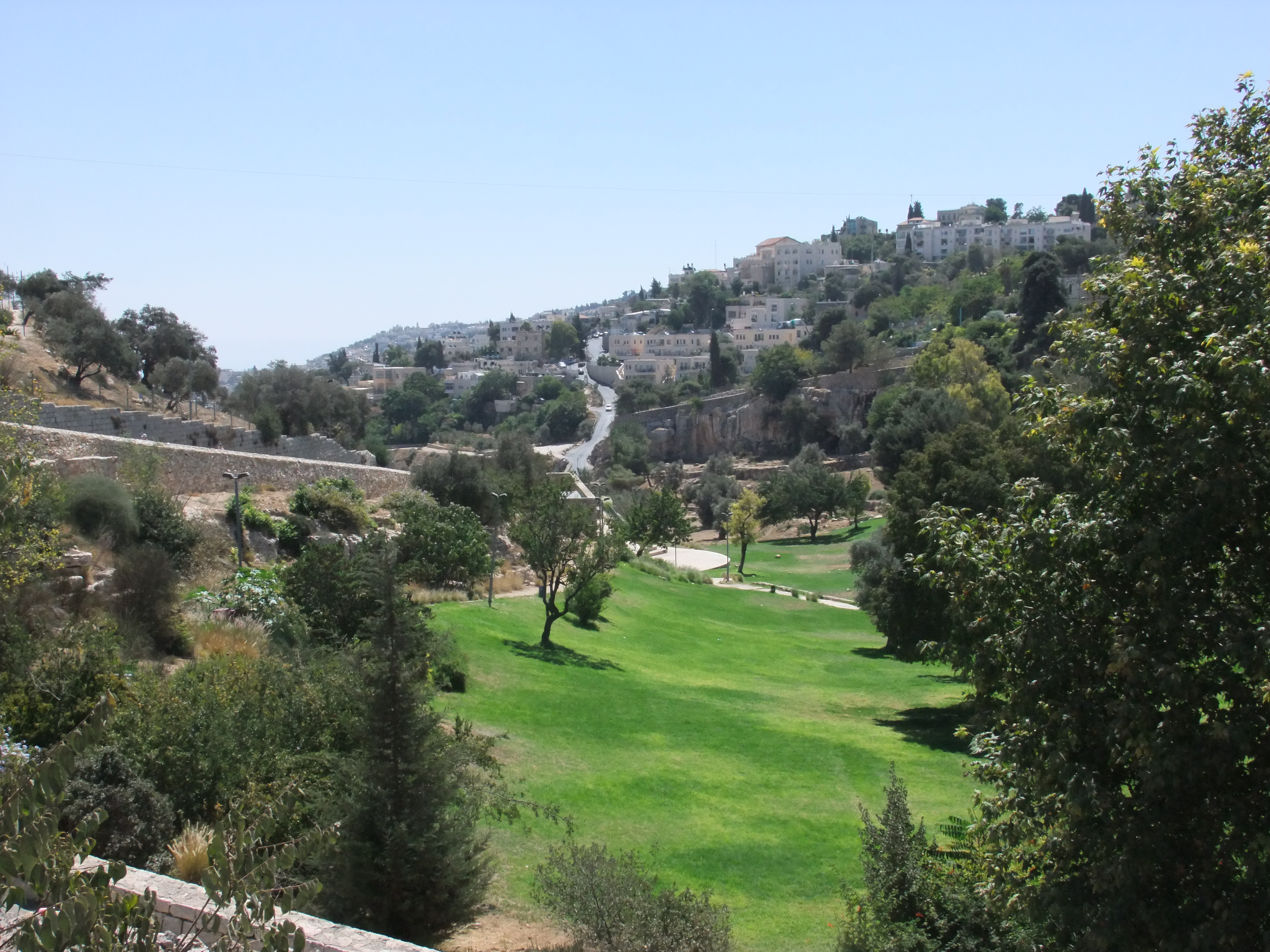
    One of the keys to understanding Gehenna is its location. It is a valley near the great city of Jerusalem, to the south and west (green on map). It is there today. This locale does not change, and will remain as long as this present earth remains.


    In contrast to hades/sheol, which is the unseen, Gehenna is very much the seen. It is not beneath, like hades/sheol; it is on the surface of the earth. The corpses that will be in Gehenna will be a visible warning sign to the living. It's a tangible deterrent. Hades/sheol swallows all of the dead—the baddies and the goodies. Gehenna is a place for dead unburied and unentombed criminals/sinners—baddies only. With these obvious differences in view, how the hell could the AKJV writers use hell for both hades/sheol and Gehenna? Liars.

    (Side Note: When discussing the topic of hell, especially with a bible-thumper, it's a good idea to politely ask them to clarify which hell they are referring to.)

    Jesus talked about Gehenna using horrible, vivid images. Since many bibles have used hell for Gehenna, the images Jesus presented to us of Gehenna make up a large part of our concept of hell. Jesus said there is fire in Gehenna. When Christianity sees fire, it instinctively thinks of hell.

    Let's keep in mind that Jesus was sent to the house of Israel (Matthew 15:22–28; Romans 15:8). His teachings in Matthew, Mark, Luke and John must be understood in this light. If we confuse the things He taught specifically to Israel with the things in the New Testament that are for the nations, we are headed for the ditch filled with demonic doctrines.

    PikiWiki Israel 33018 Valley of HinnomThe full scope of Jesus' beneficial mission, and victory, does include all of creation. But this is revealed to us through Paul, the apostle to the nations (Romans 8:18–25; Colossians 1:15–20). It's very interesting that Paul never mentions Gehenna. Yep. Part of the reason is because Gehenna is linked tightly to Jerusalem and Israel, and God's mission for Paul went far beyond this limited area and people. Other apostles were tasked with bringing the truth to Israel (Galatians 2:7–9).

    People can currently walk or drive through the valley. It is not now operating as the Gehenna Jesus spoke of because His kingdom has not yet manifested on the earth.

    I'll admit, I wish God would give us more to go on concerning many subjects, including Gehenna. But we have to be content with what He gives us in the Scriptures. We can't be so led by our hunger for more knowledge that we begin to swallow information from sources outside of the Scriptures just because it supports our particular view. I see people try to promote lies based on non-scriptural sources. If any information we encounter outside of the Scriptures jives with the Scriptures, fine, believe it. But if it doesn't, we must realize that this information is not scriptural, and should always be kept in its proper place. Be on your guard.


    Gehenna in the Old Testament


    The valley of Gehenna has had various names over time. And though it has been used in many different ways, it has always been the valley to the south and west of Jerusalem.

    The Valley of the Son of Hinnom


    Throughout the Old Testament, Gehenna is called the valley of the Son of Hinnom (Joshua 15:8, 18:16, etc.) and the valley of Hinnom. Topheth (or Tophet) was a location within the valley and was often mentioned with it. Some details of the valley:

    • it is part of the boundary between the tribe of Judah and the tribe of Benjamin (Joshua 15:8, 18:16)
    • it is one of the three main valleys near Jerusalem, the others being the Kidron Valley and the Tyropoeon Valley (Valley of the Cheesemakers or Tyrians)
    • it became a place of idol worship (Baal, Molech) where wayward Jews sacrificed their sons and daughters in fire (2 Chronicles 28:3)
    • the sons of Judah built the high places of Topheth, which was in the valley, to sacrifice their children (Jeremiah 7:31)
    • King Josiah broke down the child sacrifice altars of Topheth (2 Kings 23:10)
    • God says in Jeremiah 7:32–33, "Therefore, behold, the days are coming, declares Yahweh, when it will no more be called Topheth, or the Valley of the Son of Hinnom, but the Valley of Slaughter; for they will bury in Topheth, because there is no room elsewhere. 33 And the carcasses of this people shall be food for the fowls of the heaven, and for the beasts of the earth; and none shall frighten them away."
    • In Jeremiah 19:11–13, he prophesies against Jerusalem saying, "Thus says Yahweh of hosts, 'As in this way I shall break this people and this city just as one breaks a potter’s vessel which cannot be mended again. And they shall entomb in Topheth until there is no place to entomb 12 So shall I do to this place, averring is Yahweh, and to its dwellers, so as to make this city like Topheth. 13 The houses of Jerusalem and the houses of the kings of Judah will become unclean like the place Topheth ... .'"

    God's words against Judah in Jeremiah 7 and 19 came to pass when the Babylonians, under King Nebuchadnezzar, destroyed Jerusalem in 586 B.C. (2 Kings 24–25 and Jeremiah 52). This is key to our understanding of Jesus' upcoming words concerning Gehenna.

    Jesus' Jewish audience knew full well what God had done to the the rebellious Jews in the past. They knew that God's bark was followed by a ferocious bite. They knew that the valley of the Son of Hinnom had a very dark history due to the sinfulness of the Jews. They knew God transformed "the valley of the Son of Hinnom" into "the valley of slaughter" and filled it with rebellious Jews.


    Gehenna in the New Testament


    Because of the valley's past, avoiding any kind of judgment related to that valley was high on a Jew's priority list. Jesus revealed to them the thin line between life and Gehenna as He made it clear that future judgments were also linked to the valley.

    It is debated as to whether the valley Gehenna was Jerusalem's garbage dump during the time of Christ. Many say garbage and unburied/unentombed criminals ended up in the valley to be consumed by an army of worms and fire. If Gehenna was the city dump where garbage and criminals ended up, then those who heard Jesus had the powerful real-life visual to reinforce His threats. If it wasn't, the dark history of the valley was enough for them get the picture He was painting.

    The Hebrew phrase hinnom (“ravine of Hinnom”) became geenna in the New Testament, which became Gehenna in English.

    Gehenna occurs 12 times in the New Testament. 11 of these are from Jesus' lips and the other from James, who wrote specifically to the 12 tribes of Israel (James 1:1). Jesus' focus during this time was Israel (Matthew 15:24). He was "the Servant of the Circumcision" (Romans 15:8).

    The judgments of the valley are related to the transgression of God's law that was given to Moses. As we see from Matthew 5:22 there are various levels of judgment. Not all transgressors "shall be liable to the Gehenna of fire." But some are. When Christ reigns on the earth, the law and its consequences will be clear to the earth's inhabitants. Loopholes will not exist under His reign.

     The following quotes are from the Concordant Literal New Testament (CLNT):

    • Matthew 5:22: "Yet I am saying to you that everyone who is angry with his brother shall be liable to the judging. Yet whoever may be saying to his brother, 'Raka!' shall be liable to the Sanhedrin. Yet whoever may be saying, 'Stupid!' shall be liable to the Gehenna of fire."
    • Matthew 5:29: "Now, if your right eye is snaring you, wrench it out and cast it from you, for it is expedient for you that one of your members should perish and not your whole body be cast into Gehenna."
    • Matthew 5:30: "And if your right hand is snaring you, strike it off and cast it from you, for it is expedient for you that one of your members should perish and not your whole body pass away into Gehenna."
    • Matthew 10:28: "And do not fear those who are killing the body, yet are not able to kill the soul. Yet be fearing Him, rather, Who is able to destroy the soul as well as the body in Gehenna."
    • Matthew 18:9: "And if your eye is snaring you, wrench it out and cast it from you. Is it ideal for you to be entering into life one-eyed, or, having two eyes, to be cast into the Gehenna of fire?"
    • Matthew 23:15: "Woe to you, scribes and Pharisees, hypocrites! for you are going about the sea and the dry land to make one proselyte, and whenever he may be becoming one, you are making him more than double a son of Gehenna than you are."
    • Matthew 23:33: "Serpents! Progeny of vipers! How may you be fleeing from the judging of Gehenna?"
    • Mark 9:43–48: "And if your hand should ever be snaring you, strike it off. It is ideal for you to be entering into life maimed, rather than, having two hands, to come away into Gehenna, into the unextinguished fire 44 where their worm is not deceasing and the fire is not going out. 45 And if your foot should be snaring you, strike it off. For it is ideal for you to be entering into life maimed or lame, rather than, having two feet, to be cast into Gehenna, into the unextinguished fire, 46 where their worm is not deceasing and the fire is not going out. 47 And if your eye should be snaring you, cast it out. It is ideal for you to be entering into the kingdom of God one-eyed, rather than, having two eyes, to be cast into the Gehenna of fire, 48 where their worm is not deceasing and the fire is not going out."
    • Luke 12:4–5: "Now I am saying to you, My friends, be not afraid of those who are killing the body and after this do not have anything more excessive that they can do. 5 Now I shall be intimating to you of Whom you may be afraid: Be afraid of Him Who, after killing, has authority to be casting into Gehenna. Yea, I am saying to you, of this One be afraid!"
    • James 3:6: "And the tongue is a fire, a world of injustice. The tongue is constituted among our members that which is spotting the whole body, and setting the wheel of our lineage aflame, and is set aflame by Gehenna."

    Check your bible against this list. Many popular bible versions use hell in these verses where God clearly used geenna (Gehenna). Why do they make this massive leap from Gehenna to hell? Remember, Gehenna is seen, and hell, in its true sense, means concealed. The reasons for this great leap are various, and none are legitimate. Satan's fingerprints are all over this crime scene.

    In The Wars of the Jews, first-century Jewish historian Josephus writes about the Jewish revolt against the Roman empire in 66–74 AD. The inhabitants of Jerusalem were dying of starvation as the Romans surrounded the city. The dead multiplied within the city to the point that, according to Josephus, "they had them cast down from the walls into the valleys beneath" (Book 5, Ch.12.3). Jesus knew this was going to happen. Was this scene in His mind as He spoke to His audience concerning Gehenna? I can't say for sure. But Josephus' words show us how the scenes in the valley can change drastically and quickly.


    The SKILSAW surgeon


    The Scriptures make it clear when Jesus is speaking in parables, and when He's not. His warnings of Gehenna are no parable. He was telling the Jews to get rid of things in their lives that would keep them from life. He used the extreme, symbolic example of lopping off and gouging out body parts to illustrate this. To literally do this would be foolish.
    File:Skil 5500 loaded.jpg
    Weapon of spiritual warfare?

    And it happened.

    I read a newspaper story years ago about a man on a construction site who used a power saw to cut off his hand. He based his extreme act on Jesus' warnings concerning Gehenna. Apparently his hand had been a naughty boy. But this was foolish. Do you think this man ceased to sin after he cut his hand off? His other hand probably took advantage of the situation when it saw the competition was gone.

    Sin in a man doesn't originate in the hand, the foot, or the eye. The heart is the culprit, as Jesus said in Matthew 15:18–19 (CLNT),
    Now those things going out of the mouth, out of the heart are coming, and those things are contaminating a man. 19 For out of the heart are coming wicked reasonings, murders, adulteries, prostitutions, thefts, false testimonies, calumnies.
    The hands, eyes, feet and other body parts are simply tools used by a wicked heart to bring the sinful desire to the level of sinful experience. The Scriptures teach that the heart is the thing that needs to be made new. Ezekiel 18:31,
    Fling away from you all your transgressions by which you transgressed, and make yourselves a new heart and a new spirit; why should you die, house of Israel?

    Concordant Version of the Old Testament - CVOT
    And later in Ezekiel 36:26 God says to Israel,
    I will give you a new heart, And a new spirit will I bestow within you, And I will take away the heart of stone from your flesh, And I will give you a heart of flesh. (CVOT)
    God is the only One who can give a new heart. If Jesus truly wanted people to remove body parts to be right with Him, they'd have to get rid of the heart also. And there wouldn't be much living after that.

    Is the literal removal of body parts a work that is required to enter life? What happened to salvation being the work of Christ alone, by grace alone? The guy who lops off body parts to gain life would then have reason to boast before God, "Look at me God! It's Phineas. Down here. The blind, penis-less torso and head! It wasn't easy, but, here I am. Let me in!" This is a no-no (Ephesians 2:8–10). I'm thinking that somewhere out there in the vast world is a religious group in which the lopping off of body parts is proof of spirituality (similar to those idiotic snake-handlers).


    Jesus and Isaiah at the worm buffet


    So we see "the valley of the Son of Hinnom" in the Old Testament, and "Gehenna" in the New Testament. They are linked together by Isaiah 66, Mark 9, worms and fire.


    In Mark 9:43–48 (see above) Jesus mentions undying worms and undying fire. Isaiah first refers to these two corpse eaters working together in 66:23–24,
    And it will come to be, as often as the new moon comes in its monthly time, And as often as the sabbath comes in its sabbath cycle, All flesh shall come to worship before Me, says Yahweh. 24 And they will go forth and see the corpses of the mortals.who transgressed against Me, For their worm shall not die, And their fire shall not be quenched, And they will become a repulsion to all flesh. (CVOT)
    Zechariah 14:16 tells us of people coming to Jerusalem during the millennium (which is in the next eon),
    And it will come to be that everyone left of all the nations coming against Jerusalem, they will also go up, as often as year by year, to worship the King, Yahweh of hosts, and to celebrate the festival of booths. (CVOT)
    These pilgrims will witness the result of the judgment of transgressors in Gehenna. I believe this will be a great deterrent and tangible proof that you don't mess with the Son of God, Who will wield an iron club during the millennium.


    The unquenchable fire; unstoppable birds and beasts


    Jesus says "the fire is not going out," and Isaiah says the fire "shall not be quenched." Does this mean it will burn forever and ever and ever ... ? No. It simply means no one will be able to put it out while it is completing the task God has assigned to it. God's words in Jeremiah 17:27,
    Yet if you do not hearken to Me to hallow the sabbath day so as not to bear a load or come with it through the gates of Jerusalem on the sabbath day, then I will ravage its gates with fire, and it will devour the citadels of Jerusalem and shall not be quenched.  (CVOT)
    2 Chronicles 36:19 and Jeremiah 52:13 describe the fire that God promised would come on Jerusalem for continued rebellion. Is that fire still burning today? No. Then it was a quenchable fire—quenchable by God—and in no way everlasting.

    God starts all of His judgment fires with a purpose that is far beyond the judgment fires. He alone will quench His fires when the work is complete.

    We see another fire in Leviticus 6:12–13 that "shall not be quenched,"
    Yet the fire on the altar shall be kept glowing on it; it shall not be quenched. The priest will make wood consume on it morning by morning and arrange the ascent offering on it and cause the fat portions of the peace offerings to fume on it. 13 The fire, it shall be kept glowing continually on the altar; it shall not be quenched. (CVOT)
    The altar and the fire are both long-gone.

    We see another instance of bodies thrown into Gehenna where fire and worms are not the primary corpse eaters. Jeremiah 7:32–33,
    Therefore, behold, the days are coming, declares Yahweh, when it will no more be called Topheth, or the Valley of the Son of Hinnom, but the Valley of Slaughter; for they will bury in Topheth, because there is no room elsewhere. 33 And the carcasses of this people shall be food for the fowls of the heaven, and for the beasts of the earth; and none shall frighten them away.
    The birds and the beasts were also unstoppable devourers, but not everlasting eaters. They feasted boldly until their godly mission was accomplished. There will be an event similar to this when Christ returns to the earth and slays the kings of the earth and their armies (Revelation 19:17–21). Birds will be called to "the great dinner of God" to feast on the flesh of those killed. They will eat until the plate is clean.


    Gehenna is a temporary eonian fire


    Following is an example of a false definition of geenna, from BibleHub.com. This concoction is the result of false assumptions and bad traditions blended with demon juice,
    (italics are in the original, I supplied the pretty colors)
    HELPS Word-studies
    1067 géenna (a transliteration of the Hebrew term, Gêhinnōm, "the valley of Hinnom") – Gehenna, i.e. hell (also referred to as the "lake of fire" in Revelation).
    Gehenna ("hell"), the place of post-resurrection torment (judgment), refers strictly to the everlasting abode of the unredeemed where they experience divine judgment in their individual resurrection-bodies. Each of the unredeemed receives one at the Great White Throne Judgment (Rev 20:11–15), i.e. a body that "matches" their capacity for torment relating to their (unique) judgment.
    That's a sloppy pile of hot crap, with a little truth on top (the green). It's like beautiful frosting on a cake made of manure, yes, manure.

    "HELPS" is very unhelpful when they go off the rails in the yellow into the deep ditch of false Christian tradition. There is zero scriptural support for the ideas above in the yellow. Satan's many concoctions, like this one, consist of various blends of truth and lies.

    Notice this false definition states "Gehenna ... refers strictly to the everlasting abode of the unredeemed ... ." But this is contradicted by Jesus' words in Matthew 18:8–9,
    Now, if your hand or your foot is snaring you, strike it off and cast it from you. Is it ideal for you to be entering into life maimed or lame, or, having two hands or two feet, to be cast into the fire eonian? 9 And if your eye is snaring you, wrench it out and cast it from you. Is it ideal for you to be entering into life one-eyed, or, having two eyes, to be cast into the Gehenna of fire? (CLNT)
    Here Jesus gives us a valuable clue concerning Gehenna when He uses "fire eonian" in verse 8 as a parallel to "Gehenna of fire" in verse 9. Gehenna is a fire eonian.

    Eonian is the CLNT translation of the Greek adjective aionion in verse 8. Every time God uses aionion, or its near relatives, He is describing something that is concerned with one or all of the aions (CLNT - eons). It never denotes endless or everlasting. (See The Eonian Times Chart, and a more in-depth look at aion and aionios.)

    God has used "fire eonian" in the past. Jude 7,
    As Sodom and Gomorrah and the cities about them in like manner to these committing ultra-prostitution, and coming away after other flesh, are lying before us, a specimen, experiencing the justice of fire eonian. (CLNT)
    Most bible translations call the fire in this verse eternal instead of eonian (the Greek is aioniou). Over the years, many have sought to pinpoint the location of Sodom and Gomorrah. If the fire that God used to destroy them is eternal, they should be able to see the still-burning eternal fire and easily proclaim, "Sodom and Gomorrah are right there, dummy." But no such fire exists today, because God didn't use eternal fire, He used eonian fire. It was temp-o-rar-y.

    So we see from the example of Sodom and Gomorrah that fire eonian is temporary, not in any way eternal or everlasting. Thus, Matthew 18:8–9 reveals to us that Gehenna is a fire eonian, not an eternal fire or everlasting fire, as taught by Christianity. Is this a game-changer? Oh, boy!


    Is Gehenna the lake of fire?


    No one in their right mind would say that the valley of the Son of Hinnom in the Old testament was hell or the lake of fire. Yet, a miraculous transformation takes place when we enter the New Testament. Now the valley does mutate into hell and the lake of fire. Why? What changed?

    Nothing.

    Let's look at some evidence that differentiates the lake of fire from Gehenna.

    • The most obvious difference is that Gehenna is a valley, and the lake of fire is a lake. God knows the difference, so should we.
    • Gehenna is a geographical location near Jerusalem. It's on the earth. We are not told where the lake of fire is located. The lake of fire does exist during the time of this current earth (Revelation 19:20, 20:10). But we don't see it currently on the earth. The lake of fire exists after this current earth is gone (Revelation 20:11–15), which leads me to believe it is not on the earth. And it exists during the time of the new earth (Revelation 21:1,8). Thus, it is probable that the lake of fire is not a geographical location on the earth, since the current earth will be completely consumed by fire, and the lake of fire survives this transition.
    • The worms and fires in the valley of Gehenna will devour corpses slowly as compared to the quick consumption that takes place when the living are cast into the lake of fire after the great white throne judgment.
    • The dead are cast into Gehenna, the living into the lake of fire, where they instantly die.
    • Gehenna is a relatively small valley, with a relatively small capacity for corpses. Jesus said "many" enter destruction, while "few" enter life (Matthew 7:13–14). Is the valley of Gehenna large enough to handle the billions who die a second time? I don't think so. It seems the valley was filled to capacity during the very small local judgment in Jeremiah 19:11. The lake of fire, on the other hand, will have the capacity, partly due to the speed of consumption of those cast into it.
    • The lake of fire is the second death. Those cast into Gehenna during the millennial reign of Christ will have experienced only one death.
    • The lake of fire is the second death and the cause of the second death. Those cast into Gehenna are already dead—Gehenna is not the cause of their death, but their destination after they are killed (Luke 12:5).
    • The beast and the false prophet are alive in the lake of fire during the millennium (Revelation 19:20, 20:10). Dead transgressors are in Gehenna during the millennium.
    • No human is cast into the lake of fire until after the millennium and the great white throne judgment. Gehenna is gone before the great white throne judgment commences, as it will flee with the earth right before the great white throne judgment (Revelation 20:11).
    • The dead rebels thrown into Gehenna during the millennium will be raised at the great white throne then cast into the lake of fire. Out of the frying pan and into the fire.

    We must keep distinct that which God has made distinct. Trust me, He'll sort it all out in the end.


    A sneak-peak of Jesus' millennial justice


    During the millennium, and beyond, the law-and-order aspect of Christ's reign will be right and swift because those who rule and reign will be operating on a superior spiritual level. They will be immortals. They will have the full measure of God's spirit. They will know and see the truth and judge accordingly.
    File:Jan Steen - The Death of Ananias - Mathiesen Gallery.jpg
    We can see previews of His reign in a couple of instances from the book of Acts. The all-knowing holy spirit and an angelic messenger dispense cans of whoop-ass on the guilty.

    The story of Ananias and Sapphira in Acts 5:1–11 is quite shocking. The apostles knew nothing of the couple's deception apart from the spirit. The couple sold some property and gave the money to the apostles. But they lied about the full amount of the sale, and they kept some of the money for themselves. Peter confronted Ananias with his crime in verse 4, "You do not lie to men, but to God." He was dealt with right then and there, falling down and giving up the soul (v.5). And great fear came on all who heard of it. His wife received the same judgment about three hours later. The apostles didn't even have to lay a hand on them. Yet both fell dead by supernatural means for their serious crimes.

    In Acts 12:19–23, Herod gave a speech that awed the crowd. The kiss-ass audience praised him as a god. He accepted this unworthy praise instead of glorifying the true God. So a messenger of the Lord struck him dead.

    Though we can't know for sure how every transgression will be dealt with during Christ's reign, we can know that it will be far superior to man's current inept rule.

    But, as always, God's judgments have a purpose that is higher than the the judgment itself. Isaiah 26:9, "For [only] when Your judgments are experienced on the earth will the inhabitants of the world learn righteousness" (Amplified Bible - AMP). The learning of righteousness, and living according to that learning, are the goals of God for humanity, not the judgments. The judgments are part of the going, and are not the end.

    Isaiah 2:2–3 tells of Christ's rule from Jerusalem during the millennium,
    And it will come to pass in the latter days, The Mount of the House of Yahweh shall be established on the summit of the mountains, And it shall be lifted up above the hills, And all the nations will stream unto it. 3 Many peoples will come and say: "Come, and let us ascend to the Mount of Yahweh, To the house of the Elohim of Jacob; And He shall direct us out of His ways, So that we may indeed walk in His paths." For from Zion shall go forth the law, And the word of Yahweh from Jerusalem. (CVOT)
    The coming millennial kingdom will be marked by tremendous blessings. Swift and efficient judgment will be one of those great blessings. The judgment of Gehenna will be one of Christ's methods for dealing with sin.

    One of the biggest troubling aspects of man's current ruling over other men is injustice. People are wrongly accused and sentenced for crimes they did not commit. On the flip-side, many criminals get away with their wicked acts. This will not be the case when Christ and His kings rule the earth.


    The millennium is not paradise restored


    No, the millennium will not be perfect, meaning sin and death and rebellion will remain. Satan will be bound for the 1000 years and will not be actively deceiving the nations (Revelation 20:1–3). But those in the goat nations who enter the millennium will transport some bad stuff into the new eon (see Matthew 25:31–46).

    However, those who will live during the millennium will see astounding, world-wide changes as Christ assumes His rightful place as King of kings and Lord of lords. "The kingdom of this world became our Lord's and His Christ's, and He shall be reigning for the eons of the eons! Amen!" (Revelation 11:15). There will still be much work to do, and He'll do it, along with His people.

    He and His government will rule with an iron club (Revelation 2:27, 12:5, 19:15). The iron club is a necessity because sin and death have not been completely annulled during this time. I'm not at all happy with God's timetable with this whole thing. I wish we could just fast-forward to the successful end of Christ's reign when sin and death will be done with forever. I don't like it, but I trust Him. God will complete His plans according to His schedule, not mine. What choice do I really have but to live with it and rest in His love and goodness?

    Psalm 2:7–9 speaks of Christ's reign,
    Do let me recount the statute of Yahweh: He has said to Me, "My Son are You; I, today, have begotten You. 8 Ask of Me, and I shall give the nations as Your allotment, and as Your holding, the limits of the earth. 9 You shall smash them with a club of iron; like a vessel of a potter, You shall shatter them."
    Zechariah 14:16–19 gives us another glimpse into the millennial reign,
    And it will come to be that everyone left of all the nations coming against Jerusalem, they will also go up, as often as year by year, to worship the King, Yahweh of hosts, and to celebrate the festival of booths. 17 And it will come, whoever shall not go up from the families of the earth, to Jerusalem to worship the King, Yahweh of hosts, then the downpour shall not come on them.18 And if a family of Egypt shall not go up, and will not come, then it will not be on them; there shall come the stroke with which Yahweh shall strike the nations which will not go up to celebrate the festival of booths.19 This shall be the sin of Egypt, and the sin of all the nations which will not go up to celebrate the festival of booths.
    The rebellious nations will be chastened throughout the next eon, just as Jesus foretold in His judging of the nations in Matthew 25:46, "And these shall be coming away into chastening eonian, yet the just into life eonian."

    Isaiah 60:12,
    For the nation and the kingdom that shall not serve you shall perish, And those nations shall be wasted, yea wasted.
    Acts 17:30–31,
    Indeed, then, condoning the times of ignorance, God is now charging mankind that all everywhere are to repent, 31 forasmuch as He assigns a day in which He is about to be judging the inhabited earth in righteousness by the Man Whom He specifies, tendering faith to all, raising Him from among the dead --
    There will be those who experience judgment by exclusion during the millennium. Matthew 8:11–12,
    Now I am saying to you that many from the east and the west shall be arriving and reclining with Abraham and Isaac and Jacob in the kingdom of the heavens, 12 yet the sons of the kingdom shall be cast out into outer darkness. There shall be lamentation and gnashing of teeth.
    Those cast into outer darkness will actually see the patriarchs and the prophets enjoying the blessings of the kingdom, but will be excluded (Luke 13:28).


    God's gonna blow stuff up


    There are so many future events that we cannot wrap our minds around. These events are solidly set on God's calendar and will reveal to our eyeballs the true awesomeness of our Creator. And they will literally transform His (and our) universe.

    Revelation 20:11 tells us, "And I perceived a great white throne, and Him Who is sitting upon it, from Whose face earth and heaven fled, and no place was found for them." Gehenna, the earthbound valley outside of Jerusalem, flees from God's face with the earth. I'm sure Hollywood could come up with some cool scenes of this powerful event. But the actual event will be far more impressive than what anyone can envision.

    After the incredible events at the great white throne play out (Revelation 20:12–15), we read this in Revelation 21:1–2,
    And I perceived a new heaven and a new earth, for the former heaven and the former earth pass away, and the sea is no more. 2 And I perceived the holy city, new Jerusalem, descending out of heaven from God, made ready as a bride adorned for her husband.
    The present earth is gone. The present heaven is gone. The sea is no more. Old Jerusalem is gone. The new Jerusalem arrives. Peter gives us additional details of these events in 2 Peter 3:7–13,
    Earth, in the future
    Yet the heavens now, and the earth, by the same word, are stored with fire, being kept for the day of the judging and destruction of irreverent men. 8 Now of this one thing you are not to be oblivious, beloved, that one day is with the Lord as a thousand years and a thousand years as one day. 9 The Lord is not tardy as to the promise, as some are deeming tardiness, but is patient because of you, not intending any to perish, but all to make room for repentance. 10 Now the day of the Lord will be arriving as a thief, in which the heavens shall be passing by with a booming noise, yet the elements shall be dissolved by combustion, and the earth and the works in it shall be found. 11 At these all, then, dissolving, to what manner of men must you belong in holy behavior and devoutness, 12 hoping for and hurrying the presence of God's day, because of which the heavens, being on fire, will be dissolved, and the elements decompose by combustion! 13 Yet we, according to His promises, are hoping for new heavens and a new earth, in which righteousness is dwelling.
    This supernatural destruction of the current heaven and earth is not the end of God's work, but a transition into new things, better things.

    Just as Christ's appearing at the end of this eon ushers in "the day of the Lord" (v.10), so too the destructive events at the end of the day of the Lord in verse 10 usher creation into "God's day" (v.12). God's day contains the new heavens and new earth. Emerging out of such catastrophic destruction in the Lord's day is something better in God's day. Only God can do this on such an immense scale. It ... will ... be ... AWESOME!

    Christ will lay down the iron club that He wielded throughout the Lord's day as we enter the final eon of God's eonian times. Christ and the saints still reign, but God's day will be marked by righteousness (v.13).


    The end of Gehenna, the 2nd Christian "hell"


    Gehenna is a "fire eonian" that pertains to the eons. It is not everlasting. In fact, the valley of the son of Hinnom does not survive the great combustion that Peter wrote about. Gehenna ends when the current earth ends. It will have served God's eonian purpose for it, and it will be removed.

    The putrid sights and smells of Gehenna will have no place on the new earth. Gehenna is not mentioned in relation to the new heaven and new earth. Those raised at the great white throne who are not found written in the scroll of life will be sent to their second death in the lake of fire, not Gehenna.

    Those cast into the lake of fire/second death after the great white throne judgment will be the last humans to experience the event called death. Those who thirst in God's day will be given the water of life freely by God (Revelation 21:6).

    God will be making all things new. Life and work go on through the final eon. But peace and righteousness reign in the lasting newness.

    Hades/sheol and the first death will have been cast into the lake of fire (Revelation 20:14). During God's day, the lake of fire is the holder the dead. No hades/sheol, no Gehenna, no first death, no sea. We will look at the lake of fire in more detail at the end of this series.

    So, there it is. The end of Gehenna, the 2nd Christian "hell." Two down, two to go. In Part 3 we will look at Tartarus.
    _______________

    Thursday, May 14, 2020

    The ends of the 4 Christian hells, Part 1 (short version)

    The most influential bible version of all time, the Authorized King James Version, calls sheol and hades "hell." Sheol is in the Old Testament; hades in the New Testament. Sheol is the same as hades.

    Sheol/hades is the first of four Christian "hells."

    But, in Revelation 20:13–14 we read,
    And the sea gives up the dead in it, and death and the unseen [hades] give up the dead in them. And they were condemned, each in accord with their acts. 14 And death and the unseen [hades] were cast into the lake of fire. This is the second death-the lake of fire.
    Orthodox Christianity has been telling humanity for centuries that "hell" is unescapable and everlasting. But we see clearly from what we just read that hades/sheol (aka "the unseen") "give up the dead" and is then "cast into the lake of fire."

    This is the end of the first Christian "hell." There are three more that will end. And, when Christ successfully completes His mission, no "hell" will remain.

    Stay tuned. 

    Wednesday, May 13, 2020

    The ends of the 4 Christian hells, Part 1 (long version)

    Bon Scott was, in my opinion, the cleverest and funniest songwriter of all time—Dirty Deeds Done Dirt Cheap, Big Balls, It's a Long Way to the Top (If You Wanna Rock'n'Roll), T.N.T., etc, etc. AC/DC's former frontman could deliver a song.


    ♪ "Highway to Hell" ♪♪


    And there's the classic Highway to Hell. Some say Bon was simply writing about life on the road in a rock'n'roll band. Others say it was the nickname for Canning Highway that he traveled in Australia. Maybe it was both. We do know Bon liked livin' easy and livin' free, and that his friends were gonna be with him at the end of the road. Bon didn't want anything to slow him down—no stop signs or speed limits—and he reached the end of his road quicker than most at the age of 33.

    The concept of a "Highway to Hell" that ends at a specific destination got me to thinking on this sunny Saturday. It got me to thinking because Orthodox Christianity presents us with 4 different hells. So, the next time a preacher tells me,"You're going to hell," I want to know which hell he's referring to. I'm a planner. I'll need to make proper travel arrangements and know which clothes to pack.

    I seems as though anytime Orthodox Christianity sees fire in the Scriptures, they think it's referring to their beloved "hell." But God uses precise words in the Scriptures to make distinctions that we need to keep clear. Let's bring into focus what Orthodoxy has blurred.


    The King's writers confuse


    "You sayin' they named a bible after me?"
    King James (the one from Scotland and England, not LeBron) put his stamp of approval on the famous 1611 bible version that came to be known as the Authorized King James Version - AKJV. Should we be concerned when a politician sticks his influence into any project? Yes.

    Many bible readers say the AKJV is the only bible version that can be trusted. Others claim the version contains thousands of errors. Regardless, it must be acknowledged by all as the most influential bible version of all time.

    I'll refer to the AKJV's 47 translators as "writers" because they were not faithful to translate all of God's words clearly from Hebrew and Greek into English. They have twisted God's words into a tale of fiction. Thus, they've caused great confusion for centuries and led readers down the wrong blurry road. Their abuse of the word hell is one of the most glaring perversions of language in bible version history. (Some other words they abused are eternal and everlasting and forever. You can read about those here.)

    The AKJV uses the single word hell to translate 3 Greek words: hades, geenna, tartaroo; and 1 Hebrew word: sheol.  


    Christian Hell #1: sheol/hades


    The Greek word hades is synonymous with the Hebrew word sheol. We know this because of the Septuagint. The Septuagint is a translation of the Hebrew scriptures into Greek that was finished before Jesus arrived on the scene. Hades is the word the translators used nearly every time for sheol, so sheol=hades.

    An example from the Scriptures of sheol=hades can be found in Psalm 16:10 and Acts 2:27, which speak of Jesus. David pens in the psalm (Hebrew in the original), "For You shall not forsake my soul in the unseen [sheol]; You shall not allow Your benign one to see corruption" (Concordant Version of the Old Testament - CVOT). This is referenced in Acts (Greek in the original), "For Thou wilt not be forsaking my soul in the unseen [hades], Nor wilt Thou be giving Thy Benign One to be acquainted with decay." (Concordant Literal New Testament - CLNT). Note the consistency of the CVOT and the CLNT in using unseen for sheol and hades. Yes, Elsie, there are good, consistent bible versions available.


    We can only see and know what God reveals to us


    The Scriptures are God's original words before they are perverted by Satan, demons and men and put into "holy" bibles. The Scriptures will usually define its own words by direct statements and/or by the usage of the word throughout the Scriptures. But, oftentimes, we are left wishing God had given us more details about a certain subject. We can only see and know what He chooses to reveal to us. "It is the glory of Elohim to conceal a matter, and the glory of kings to investigate a matter" (Proverbs 25:2). Let's be kings and dig into this matter.

    The meaning of sheol eludes the complete grasping of our minds because our minds aren't meant by God to completely grasp it (at least not currently). Jeff Benner writes,
    The Ancient Hebrews did not know where, or even what, she'ol was. To them it was an "unknown" place, hence its relationship to sha'al meaning "unknown." Ancient Hebrews never speculated on something unknown—to them it was simply "unknown" and left at that. But one with a Greek mindset always desires to know the unknown. It is our Greco-Roman western mindset that needs to know where and what she'ol is.
    (https://www.ancient-hebrew.org/living-words/the-living-words-hell.htm
    Yes, Jeff, I want to know. But if I can't know anything beyond what God has chosen to reveal, why beat my head against a wall that He erected? We need to be content with not knowing some things, even some very important things. This is where faith and trust in God lives, in the unknown. But we will bring our heads right up against God's wall of concealment. There will be no beating.

    The Greek word hades doesn't help our understanding much. It simply means unseen. So we're dealing with something we desire to know about that is unseen and unknown. While being content with what God has revealed to us, it is good to explore all that He has chosen to reveal.


    The baddies and the goodies


    Throughout the Old Testament, sheol carries a negative vibe due to its inseparable association with our old enemy death. That makes sense. But this negative vibe is multiplied by the fact that the AKJV calls sheol "hell" 31 times. This leads us to think that only wicked people go to sheol. But that's not the case. Sheol is where all the dead go—believers and unbelievers, the godly and the ungodly, the baddies and the goodies. Sheol is like death in that its appetite is never satisfied, so it's not picky about whom it consumes.

    "The unseen widens its greedy soul" - Isaiah 5:14
    The King's writers used the word hell a total of 54 times throughout their bible (according to BibleGateway.com). All 31 times they used hell  in the Old Testament, it was used for the Hebrew word sheol. And that sounds pretty good: 1 Hebrew word translated into 1 English word. Nice and neat. But here's the problem: sheol occurs over 60 times. The King's writers also used grave (30 times) and pit (3 times) to convey sheol into English. And they used grave and pit to convey other Hebrew words besides sheol into English. The King's "scholars" created a word orgy.

    Cue the confusion.

    Why did they use grave and hell to do work for sheol in English? Sheol was the only available place in the Old Testament that they could convert into hell, the place where they could send the baddies forever. And since they couldn't put the goodies in hell forever, they used grave when sheol was used in relation to the goodies. It's a classic cover-up. Baddies go to hell; goodies to the grave. But it's the same place! Some of the goodies they tried to protect are Jacob/Israel, Joseph, Job, David, the Messiah, and King Hezekiah.

    Let's play along with the AKJV authors and imagine that sheol is hell. But we'll imagine it is hell in every instance.


    Playtime with bible scholars: Jacob, 2 places at once?


    Let's look at the example of Jacob/Israel and Joseph (the technicolor dreamcoat kid). Joseph's jealous brothers sold him into slavery. Then they lied to their father, Jacob, and made it seem as if Joseph was the victim of an evil wild beast. Jacob's children tried to comfort him, but he wouldn't have it. Jacob's words in Genesis 37:35 from the AKJV,
    For I will go down into the grave [sheol] unto my son mourning.
    Jacob knew that his death would propel him into sheol, where he believed Joseph had already gone. Now, if the King's writers were consistent in their use of hell, here's what Jacob would have said,
    For I will go down into hell unto my son mourning.
    This would cause a mild disturbance at an orthodox bible scholars conference. Coffee would be spilled and spat cross-table. A consistent translation of sheol into hell would place Joseph in hell (at least in Jacob's mind, since he thought his son was dead). And Jacob was to follow. This lands one of the three Hebrew patriarchs, Jacob, and one of the clearest types of Christ in the Old Testament, Joseph, in hell. That creates a sizable problem for Orthodox Christianity, which says hell is inescapable and everlasting (whether it is eternal torment or annihilation). They could not stomach that end for Joseph and Jacob. So the King's writers used multiple words for sheol, and readers are deceived.

    Jacob being sentenced to unending and inescapable hell would flatly contradict Jesus' words concerning Jacob in Matthew 8:11 (CLNT),
    Now I am saying to you that many from the east and the west shall be arriving and reclining with Abraham and Isaac and Jacob in the kingdom of the heavens ... .
    If hell holds its captives forever, how the hell will Jacob escape it and end up in the kingdom of the heavens? But we see from the example of Jacob that sheol ("hell") is temporary and able to be exited by the power of God through resurrection. Orthodox Christianity has painted itself into an inescapable corner of confusion. Sheol is not hell, and it is not the grave or pit. Sheol is sheol. Leaving the word alone to speak for itself would have been best. Now we have a huge demonic word orgy to clean up.


    God brings people up from hell?


    Another example. In 1 Samuel 2:6 Hannah is praying to God. And she says these facts about God, (from the AKJV),
    The Lord killeth, and maketh alive: he bringeth down to the grave [sheol], and bringeth up.
    But, if the King's writers were consistent, we'd read this,
    The Lord killeth, and maketh alive: he bringeth down to hell, and bringeth up.
    The Lord bringeth people up from hell? Again, spilt and spat conference coffee. If you have a pastor in a Christian church, ask him to explain to you this example and the Jacob one. I have no idea what he'd say, but please let me know in the comments if you can get an answer out of him.


    God destroys hell?


    Alright, one more (I can't help myself, this is too easy and kinda fun). One more example of the King's writers confusing their readers is in Hosea 13:14, from the AKJV,
    I [God] will ransom them [Ephraim: Joseph's son and a wayward tribe of Israel] from the power of the grave [sheol]; I will redeem them from death: O death, I will be thy plagues; O grave [sheol], I will be thy destruction: repentance shall be hid from mine eyes.
    If the King's "scholars" were consistent, and ethical, we'd have,
    I will ransom them from the power of hell; I will redeem them from death: O death, I will be thy plagues; O hell, I will be thy destruction: repentance shall be hid from mine eyes.
    But this would smash all to hell Orthodoxy's teaching on hell. "How dare God go against our doctrines by ransoming people from hell, and then destroying our most beloved destination for our enemies!" Well, God's not going to ransom people from your fictitious "hell." But He will ransom them from sheol. He's not going to destroy your fictitious everlasting prison of torture, He's going to destroy sheol.


    The truth will set you free from hell


    Can you imagine the liberation in humanity that would come from the teaching that "hell" is only temporary? Non-Pentacostals would dance. Fringe-riding Baptists would discover the tastiness of theatre popcorn.

    Orthodox Christianity simply neglected to consult their Maker on this issue of sheol and hell. They have contradicted, denied and twisted His perfect words. Whoa! And, woe!

    Imagine, if you can, the King's writers were consistent in their treatment of sheol. If they had only used grave to do duty for sheol in the English, we would have no hell in the Old Testament. "Perish the thought!" exclaims the Church Lady. If they had only used hell for sheol, oh boy, would our understanding of hell be completely different than what Orthodoxy has proclaimed for centuries. 

    People don't crack open their bibles thinking, "My bible's going to feed me demonic lies." They are trusting that their bibles are telling them the truth, the whole truth, and nothing but the truth. It's a serious mistake to think that all bibles are created equal. Satan has no obligation to tell you the truth. In fact, his job is to do just the opposite. Religion and "holy" writings are two of his greatest weapons for deception. Reader beware!


    God reveals bits of sheol


    God is not completely silent on the topic of sheol. The Scriptures provide us the following bits of info. Keep in mind that some are literal and some are symbolic.

    • sheol is down, below, beneath (Deuteronomy 32:22)
    • sheol is secluded (Job 14:13)
    • in sheol there is no remembrance or acclaiming of God (Psalm 6:5; Isaiah 38:18)
    • in sheol people are still (Psalm 31:17)
    • sheol is a residence (Psalm 49:14)
    • sheol has "hands," as if holding the dead (Psalm 49:15, 89:48)
    • sheol has a grip on its residents—the dead (Hosea 13:14)
    • God will ransom people from the grip of sheol (Hosea 13:14)
    • sheol has a "mouth" (Psalm 141:7)
    • sheol swallows people (Proverbs 1:12)
    • sheol is never satisfied (Proverbs 27:20, 30:15–16)
    • there is no doing, or devising, or knowledge, or wisdom in sheol (Ecclesiastes 9:10)
    • sheol has "gates" (Isaiah 38:10)
    • there is no looking forward to God's faithfulness in sheol (Isaiah 38:18)
    • God brings people up from sheol (1 Samuel 2:6)
    • sheol has cables that surround a man (2 Samuel 22:6)
    • sheol is not as deep as God (Job 11:8)
    • sheol was/is naked in front of God (Job 26:6)
    • the wicked and the nations that forget God are there (Psalm 9:17)
    • David's and Christ's soul shall not be forsaken in sheol (Psalm 16:10)
    • sheol has constrictions that converge on the living (Psalm 116:3)
    • God is there (Psalm 139:8)
    • sheol is where the dead go (Proverbs 7:27)
    • sheol lies open in front of Yahweh (Proverbs 15:11)
    • the Rephaim are there, along with the he-goats of the earth and all the kings of the nations (Isaiah 14:9)
    • pomp is brought down to sheol (Isaiah 14:11) 
    • sheol is used by Jonah to describe the belly of the fish (Jonah 2:2),
    • people in sheol are said to be doing things (Isaiah 14:9; Ezekiel 32:21,27)
    • souls are in sheol, or headed for sheol, not spirits (Psalm 16:10, 30:3, 49:15, 86:13, 89:48; Proverbs 23:14)

    I want to expand on that last bullet point a tad. The souls of the dead are is in sheol, not their spirits. At death the spirit returns to God (Luke 23:46; Acts 7:59; Ecclesiastes 12:7), and the body returns to the earth. The soul is living when the body and spirit are joined. When body and spirit are separated, there is no life.

    An apparent contradiction I see on this list is that some verses say people are doing things in sheol, and some say people are doing nothing in sheol. When a man's spirit returns to God when he dies, that man becomes as lifeless as Adam was before God breathed into him the breath of life (Genesis 2:7). Adam was not a living soul until the breath of life from God entered him. The verses above that speak of activity in sheol are symbolic. Taking them literally would not make sense. Taking them literally would make death another form of life. Death is not another form of life. Death really is death. This simple truth is unbelieved by much of humanity (including Orthodox Christianity). Sorry, Bon, there will be no party time in sheol.


    Hades: the confusion continues


    Let's move on to the New Testament, where the King's writers continue their hellish confusion.

    The word hell is used 23 times in the AKJV in the New Testament. It is used for hades 10 times, geena 12 times, and tartaroo once (tartaroo is actually a verb). That's like having 3 friends in your circle named Phil. If you don't make a clear distinction among the three Phils when you're gossiping, the wrong Phil might get castrated by his wife for an adulterous act he didn't commit.

    Remember our equation: sheol=hades. So let's just build upon what we've already seen concerning sheol in the Old Testament.

    Hades is a 2-part word made up of the negative prefix a (alpha). When it is used as a prefix it means no, not, un, without. The second part is eido, which means see. The parts joined together give us un-seen. Both sheol and hades are rendered consistently as unseen in the CVOT and CLNT.


    "Jesus talked about hell more than he talked about heaven."


    I've read statements like the previous subtitle over the years. Did our Savior really talk about hell more than heaven? Well, no. He talked about hades and geena (Gehenna). More than heaven? Does it matter? No. Here's what the Scriptures say about hades in the New Testament,

    • the city of Capernaum will go down to hades (Matthew 11:23; Luke 10:15)
    • the gates of hades shall not be prevailing against Jesus' called-out people (Matthew 16:18)
    • in the parable (yes, it's a parable) of the rich man and Lazarus (Luke 16:19–31), the rich man, in hades, is tormented and pained in the flame
    • Christ is not forsaken in hades, He is resurrected (Acts 2:27, 31)  
    • Christ has the keys of death and hades (Revelation 1:18)
    • Hades follows Death, who is riding the 4th horse, which is greenish in color (Revelation 6:8)
    • death and hades will give up the dead in them (Revelation 20:13)
    • death and hades will be cast into the lake of fire (Revelation 20:14)

    Please, please remember Who has the keys of death and hades/sheol. It's not Satan, it's not demons, it's not the hellfire preachers, it's not the Republican'ts. It's Christ Jesus, the Savior of the world (John 3:17; 1 John 4:14, etc., etc.).

    So, if hades is hell, as the AKJV tells us, and hades gives up the dead in it (Revelation 20:13), we have the complete emptying of one of Orthodox Christianity's hells. Did they teach you that in Sunday School? Hades' power is removed as Christ unlocks its gates. And all of the dead are released. Just as Christ exited sheol/hades via resurrection, so too will the rest of humanity. That's great news.

    So what happens to all the dead who are rescued from hades/sheol? This vital question, and more, will be answered in upcoming parts. Stay tuned.


    The end of the first Christian hell


    Sheol/hades currently serves a purpose in God's plans. Otherwise, it wouldn't exist. The bulldozer doesn't remain as a permanent yard ornament in front of the newly finished home. The foreman trucks it in, uses it to do a job, then trucks it away.

    Sheol/hades exits stage left forever when it is cast in to the lake of fire in Revelation 20:14. It will not be missed. God says it will happen. Believe it or not.
    https://www.gotohellmi.com/

    Many see hades as hell. And many see the lake of fire as hell. So, if both are true, then in Revalation 20:14 we have hell being cast into hell. But such nonsense we will not tolerate. We will ask the proponents of hell to be clear in their writings and speech. If they refuse, they can go to Hell (I heard there's a great saloon there).

    We see clearly that God will empty and destroy the first Christian hell. And orthodoxy quickly pulls another hell from behind its back and says, "Not so fast, Christ believer!"

    In Part 2 we will investigate the dreaded geenna (Gehenna).

    ___________
    In the meantime, here's a good read:
    Dear Mr. Hell
    ___________
    Images
    "Ode to Bon" by Ian Ransley is licensed under CC BY 2.0
    LeBron James - Caricature by DonkeyHotey is licensed under CC BY-SA 2.0 (cropped)
    "Open Wide" by Wes Fahlenkamp
    Hell, Michigan map by Google (screenshot)