There are various sizes of Jesuses in the world today. Most are just too damn tiny to accomplish the big projects God has begun. But the true Jesus - the Biggest Jesus - has the power, wisdom and love to finish all of God's work.
Showing posts with label Jesus' power. Show all posts
Showing posts with label Jesus' power. Show all posts
Sunday, July 19, 2020

Thursday, May 14, 2020
The ends of the 4 Christian hells, Part 1 (short version)
The most influential bible version of all time, the Authorized King James Version, calls sheol and hades "hell." Sheol is in the Old Testament; hades in the New Testament. Sheol is the same as hades.
Sheol/hades is the first of four Christian "hells."
But, in Revelation 20:13–14 we read,
This is the end of the first Christian "hell." There are three more that will end. And, when Christ successfully completes His mission, no "hell" will remain.
Stay tuned.
Sheol/hades is the first of four Christian "hells."
But, in Revelation 20:13–14 we read,
And the sea gives up the dead in it, and death and the unseen [hades] give up the dead in them. And they were condemned, each in accord with their acts. 14 And death and the unseen [hades] were cast into the lake of fire. This is the second death-the lake of fire.Orthodox Christianity has been telling humanity for centuries that "hell" is unescapable and everlasting. But we see clearly from what we just read that hades/sheol (aka "the unseen") "give up the dead" and is then "cast into the lake of fire."
This is the end of the first Christian "hell." There are three more that will end. And, when Christ successfully completes His mission, no "hell" will remain.
Stay tuned.
Wednesday, May 13, 2020
The ends of the 4 Christian hells, Part 1 (long version)

♪ "Highway to Hell" ♪♪
And there's the classic Highway to Hell. Some say Bon was simply writing about life on the road in a rock'n'roll band. Others say it was the nickname for Canning Highway that he traveled in Australia. Maybe it was both. We do know Bon liked livin' easy and livin' free, and that his friends were gonna be with him at the end of the road. Bon didn't want anything to slow him down—no stop signs or speed limits—and he reached the end of his road quicker than most at the age of 33.
The concept of a "Highway to Hell" that ends at a specific destination got me to thinking on this sunny Saturday. It got me to thinking because Orthodox Christianity presents us with 4 different hells. So, the next time a preacher tells me,"You're going to hell," I want to know which hell he's referring to. I'm a planner. I'll need to make proper travel arrangements and know which clothes to pack.
I seems as though anytime Orthodox Christianity sees fire in the Scriptures, they think it's referring to their beloved "hell." But God uses precise words in the Scriptures to make distinctions that we need to keep clear. Let's bring into focus what Orthodoxy has blurred.
The King's writers confuse
 |
| "You sayin' they named a bible after me?" |
Many bible readers say the AKJV is the only bible version that can be trusted. Others claim the version contains thousands of errors. Regardless, it must be acknowledged by all as the most influential bible version of all time.
I'll refer to the AKJV's 47 translators as "writers" because they were not faithful to translate all of God's words clearly from Hebrew and Greek into English. They have twisted God's words into a tale of fiction. Thus, they've caused great confusion for centuries and led readers down the wrong blurry road. Their abuse of the word hell is one of the most glaring perversions of language in bible version history. (Some other words they abused are eternal and everlasting and forever. You can read about those here.)
The AKJV uses the single word hell to translate 3 Greek words: hades, geenna, tartaroo; and 1 Hebrew word: sheol.
Christian Hell #1: sheol/hades
The Greek word hades is synonymous with the Hebrew word sheol. We know this because of the Septuagint. The Septuagint is a translation of the Hebrew scriptures into Greek that was finished before Jesus arrived on the scene. Hades is the word the translators used nearly every time for sheol, so sheol=hades.
An example from the Scriptures of sheol=hades can be found in Psalm 16:10 and Acts 2:27, which speak of Jesus. David pens in the psalm (Hebrew in the original), "For You shall not forsake my soul in the unseen [sheol]; You shall not allow Your benign one to see corruption" (Concordant Version of the Old Testament - CVOT). This is referenced in Acts (Greek in the original), "For Thou wilt not be forsaking my soul in the unseen [hades], Nor wilt Thou be giving Thy Benign One to be acquainted with decay." (Concordant Literal New Testament - CLNT). Note the consistency of the CVOT and the CLNT in using unseen for sheol and hades. Yes, Elsie, there are good, consistent bible versions available.
The Scriptures are God's original words before they are perverted by Satan, demons and men and put into "holy" bibles. The Scriptures will usually define its own words by direct statements and/or by the usage of the word throughout the Scriptures. But, oftentimes, we are left wishing God had given us more details about a certain subject. We can only see and know what He chooses to reveal to us. "It is the glory of Elohim to conceal a matter, and the glory of kings to investigate a matter" (Proverbs 25:2). Let's be kings and dig into this matter.
The meaning of sheol eludes the complete grasping of our minds because our minds aren't meant by God to completely grasp it (at least not currently). Jeff Benner writes,
The Greek word hades doesn't help our understanding much. It simply means unseen. So we're dealing with something we desire to know about that is unseen and unknown. While being content with what God has revealed to us, it is good to explore all that He has chosen to reveal.
The baddies and the goodies
We can only see and know what God reveals to us
The Scriptures are God's original words before they are perverted by Satan, demons and men and put into "holy" bibles. The Scriptures will usually define its own words by direct statements and/or by the usage of the word throughout the Scriptures. But, oftentimes, we are left wishing God had given us more details about a certain subject. We can only see and know what He chooses to reveal to us. "It is the glory of Elohim to conceal a matter, and the glory of kings to investigate a matter" (Proverbs 25:2). Let's be kings and dig into this matter.
The meaning of sheol eludes the complete grasping of our minds because our minds aren't meant by God to completely grasp it (at least not currently). Jeff Benner writes,
The Ancient Hebrews did not know where, or even what, she'ol was. To them it was an "unknown" place, hence its relationship to sha'al meaning "unknown." Ancient Hebrews never speculated on something unknown—to them it was simply "unknown" and left at that. But one with a Greek mindset always desires to know the unknown. It is our Greco-Roman western mindset that needs to know where and what she'ol is.Yes, Jeff, I want to know. But if I can't know anything beyond what God has chosen to reveal, why beat my head against a wall that He erected? We need to be content with not knowing some things, even some very important things. This is where faith and trust in God lives, in the unknown. But we will bring our heads right up against God's wall of concealment. There will be no beating.
(https://www.ancient-hebrew.org/living-words/the-living-words-hell.htm)
The Greek word hades doesn't help our understanding much. It simply means unseen. So we're dealing with something we desire to know about that is unseen and unknown. While being content with what God has revealed to us, it is good to explore all that He has chosen to reveal.
The baddies and the goodies
Throughout the Old Testament, sheol carries a negative vibe due to its inseparable association with our old enemy death. That makes sense. But this negative vibe is multiplied by the fact that the AKJV calls sheol "hell" 31 times. This leads us to think that only wicked people go to sheol. But that's not the case. Sheol is where all the dead go—believers and unbelievers, the godly and the ungodly, the baddies and the goodies. Sheol is like death in that its appetite is never satisfied, so it's not picky about whom it consumes.
 |
| "The unseen widens its greedy soul" - Isaiah 5:14 |
Cue the confusion.
Why did they use grave and hell to do work for sheol in English? Sheol was the only available place in the Old Testament that they could convert into hell, the place where they could send the baddies forever. And since they couldn't put the goodies in hell forever, they used grave when sheol was used in relation to the goodies. It's a classic cover-up. Baddies go to hell; goodies to the grave. But it's the same place! Some of the goodies they tried to protect are Jacob/Israel, Joseph, Job, David, the Messiah, and King Hezekiah.
Let's play along with the AKJV authors and imagine that sheol is hell. But we'll imagine it is hell in every instance.
Let's look at the example of Jacob/Israel and Joseph (the technicolor dreamcoat kid). Joseph's jealous brothers sold him into slavery. Then they lied to their father, Jacob, and made it seem as if Joseph was the victim of an evil wild beast. Jacob's children tried to comfort him, but he wouldn't have it. Jacob's words in Genesis 37:35 from the AKJV,
Jacob being sentenced to unending and inescapable hell would flatly contradict Jesus' words concerning Jacob in Matthew 8:11 (CLNT),
Another example. In 1 Samuel 2:6 Hannah is praying to God. And she says these facts about God, (from the AKJV),
Alright, one more (I can't help myself, this is too easy and kinda fun). One more example of the King's writers confusing their readers is in Hosea 13:14, from the AKJV,
Can you imagine the liberation in humanity that would come from the teaching that "hell" is only temporary? Non-Pentacostals would dance. Fringe-riding Baptists would discover the tastiness of theatre popcorn.
Orthodox Christianity simply neglected to consult their Maker on this issue of sheol and hell. They have contradicted, denied and twisted His perfect words. Whoa! And, woe!
Imagine, if you can, the King's writers were consistent in their treatment of sheol. If they had only used grave to do duty for sheol in the English, we would have no hell in the Old Testament. "Perish the thought!" exclaims the Church Lady. If they had only used hell for sheol, oh boy, would our understanding of hell be completely different than what Orthodoxy has proclaimed for centuries.
Let's play along with the AKJV authors and imagine that sheol is hell. But we'll imagine it is hell in every instance.
Playtime with bible scholars: Jacob, 2 places at once?
Let's look at the example of Jacob/Israel and Joseph (the technicolor dreamcoat kid). Joseph's jealous brothers sold him into slavery. Then they lied to their father, Jacob, and made it seem as if Joseph was the victim of an evil wild beast. Jacob's children tried to comfort him, but he wouldn't have it. Jacob's words in Genesis 37:35 from the AKJV,
For I will go down into the grave [sheol] unto my son mourning.Jacob knew that his death would propel him into sheol, where he believed Joseph had already gone. Now, if the King's writers were consistent in their use of hell, here's what Jacob would have said,
For I will go down into hell unto my son mourning.This would cause a mild disturbance at an orthodox bible scholars conference. Coffee would be spilled and spat cross-table. A consistent translation of sheol into hell would place Joseph in hell (at least in Jacob's mind, since he thought his son was dead). And Jacob was to follow. This lands one of the three Hebrew patriarchs, Jacob, and one of the clearest types of Christ in the Old Testament, Joseph, in hell. That creates a sizable problem for Orthodox Christianity, which says hell is inescapable and everlasting (whether it is eternal torment or annihilation). They could not stomach that end for Joseph and Jacob. So the King's writers used multiple words for sheol, and readers are deceived.
Jacob being sentenced to unending and inescapable hell would flatly contradict Jesus' words concerning Jacob in Matthew 8:11 (CLNT),
Now I am saying to you that many from the east and the west shall be arriving and reclining with Abraham and Isaac and Jacob in the kingdom of the heavens ... .If hell holds its captives forever, how the hell will Jacob escape it and end up in the kingdom of the heavens? But we see from the example of Jacob that sheol ("hell") is temporary and able to be exited by the power of God through resurrection. Orthodox Christianity has painted itself into an inescapable corner of confusion. Sheol is not hell, and it is not the grave or pit. Sheol is sheol. Leaving the word alone to speak for itself would have been best. Now we have a huge demonic word orgy to clean up.
God brings people up from hell?
Another example. In 1 Samuel 2:6 Hannah is praying to God. And she says these facts about God, (from the AKJV),
The Lord killeth, and maketh alive: he bringeth down to the grave [sheol], and bringeth up.But, if the King's writers were consistent, we'd read this,
The Lord killeth, and maketh alive: he bringeth down to hell, and bringeth up.The Lord bringeth people up from hell? Again, spilt and spat conference coffee. If you have a pastor in a Christian church, ask him to explain to you this example and the Jacob one. I have no idea what he'd say, but please let me know in the comments if you can get an answer out of him.
God destroys hell?
Alright, one more (I can't help myself, this is too easy and kinda fun). One more example of the King's writers confusing their readers is in Hosea 13:14, from the AKJV,
I [God] will ransom them [Ephraim: Joseph's son and a wayward tribe of Israel] from the power of the grave [sheol]; I will redeem them from death: O death, I will be thy plagues; O grave [sheol], I will be thy destruction: repentance shall be hid from mine eyes.If the King's "scholars" were consistent, and ethical, we'd have,
I will ransom them from the power of hell; I will redeem them from death: O death, I will be thy plagues; O hell, I will be thy destruction: repentance shall be hid from mine eyes.But this would smash all to hell Orthodoxy's teaching on hell. "How dare God go against our doctrines by ransoming people from hell, and then destroying our most beloved destination for our enemies!" Well, God's not going to ransom people from your fictitious "hell." But He will ransom them from sheol. He's not going to destroy your fictitious everlasting prison of torture, He's going to destroy sheol.
The truth will set you free from hell
Can you imagine the liberation in humanity that would come from the teaching that "hell" is only temporary? Non-Pentacostals would dance. Fringe-riding Baptists would discover the tastiness of theatre popcorn.
Orthodox Christianity simply neglected to consult their Maker on this issue of sheol and hell. They have contradicted, denied and twisted His perfect words. Whoa! And, woe!
Imagine, if you can, the King's writers were consistent in their treatment of sheol. If they had only used grave to do duty for sheol in the English, we would have no hell in the Old Testament. "Perish the thought!" exclaims the Church Lady. If they had only used hell for sheol, oh boy, would our understanding of hell be completely different than what Orthodoxy has proclaimed for centuries.
People don't crack open their bibles thinking, "My bible's going to feed me demonic lies." They are trusting that their bibles are telling them the truth, the whole truth, and nothing but the truth. It's a serious mistake to think that all bibles are created equal. Satan has no obligation to tell you the truth. In fact, his job is to do just the opposite. Religion and "holy" writings are two of his greatest weapons for deception. Reader beware!
God reveals bits of sheol
God is not completely silent on the topic of sheol. The Scriptures provide us the following bits of info. Keep in mind that some are literal and some are symbolic.
- sheol is down, below, beneath (Deuteronomy 32:22)
- sheol is secluded (Job 14:13)
- in sheol there is no remembrance or acclaiming of God (Psalm 6:5; Isaiah 38:18)
- in sheol people are still (Psalm 31:17)
- sheol is a residence (Psalm 49:14)
- sheol has "hands," as if holding the dead (Psalm 49:15, 89:48)
- sheol has a grip on its residents—the dead (Hosea 13:14)
- God will ransom people from the grip of sheol (Hosea 13:14)
- sheol has a "mouth" (Psalm 141:7)
- sheol swallows people (Proverbs 1:12)
- sheol is never satisfied (Proverbs 27:20, 30:15–16)
- there is no doing, or devising, or knowledge, or wisdom in sheol (Ecclesiastes 9:10)
- sheol has "gates" (Isaiah 38:10)
- there is no looking forward to God's faithfulness in sheol (Isaiah 38:18)
- God brings people up from sheol (1 Samuel 2:6)
- sheol has cables that surround a man (2 Samuel 22:6)
- sheol is not as deep as God (Job 11:8)
- sheol was/is naked in front of God (Job 26:6)
- the wicked and the nations that forget God are there (Psalm 9:17)
- David's and Christ's soul shall not be forsaken in sheol (Psalm 16:10)
- sheol has constrictions that converge on the living (Psalm 116:3)
- God is there (Psalm 139:8)
- sheol is where the dead go (Proverbs 7:27)
- sheol lies open in front of Yahweh (Proverbs 15:11)
- the Rephaim are there, along with the he-goats of the earth and all the kings of the nations (Isaiah 14:9)
- pomp is brought down to sheol (Isaiah 14:11)
- sheol is used by Jonah to describe the belly of the fish (Jonah 2:2),
- people in sheol are said to be doing things (Isaiah 14:9; Ezekiel 32:21,27)
- souls are in sheol, or headed for sheol, not spirits (Psalm 16:10, 30:3, 49:15, 86:13, 89:48; Proverbs 23:14)
I want to expand on that last bullet point a tad. The souls of the dead are is in sheol, not their spirits. At death the spirit returns to God (Luke 23:46; Acts 7:59; Ecclesiastes 12:7), and the body returns to the earth. The soul is living when the body and spirit are joined. When body and spirit are separated, there is no life.
An apparent contradiction I see on this list is that some verses say people are doing things in sheol, and some say people are doing nothing in sheol. When a man's spirit returns to God when he dies, that man becomes as lifeless as Adam was before God breathed into him the breath of life (Genesis 2:7). Adam was not a living soul until the breath of life from God entered him. The verses above that speak of activity in sheol are symbolic. Taking them literally would not make sense. Taking them literally would make death another form of life. Death is not another form of life. Death really is death. This simple truth is unbelieved by much of humanity (including Orthodox Christianity). Sorry, Bon, there will be no party time in sheol.
An apparent contradiction I see on this list is that some verses say people are doing things in sheol, and some say people are doing nothing in sheol. When a man's spirit returns to God when he dies, that man becomes as lifeless as Adam was before God breathed into him the breath of life (Genesis 2:7). Adam was not a living soul until the breath of life from God entered him. The verses above that speak of activity in sheol are symbolic. Taking them literally would not make sense. Taking them literally would make death another form of life. Death is not another form of life. Death really is death. This simple truth is unbelieved by much of humanity (including Orthodox Christianity). Sorry, Bon, there will be no party time in sheol.
Hades: the confusion continues
Let's move on to the New Testament, where the King's writers continue their hellish confusion.
The word hell is used 23 times in the AKJV in the New Testament. It is used for hades 10 times, geena 12 times, and tartaroo once (tartaroo is actually a verb). That's like having 3 friends in your circle named Phil. If you don't make a clear distinction among the three Phils when you're gossiping, the wrong Phil might get castrated by his wife for an adulterous act he didn't commit.
Remember our equation: sheol=hades. So let's just build upon what we've already seen concerning sheol in the Old Testament.
Hades is a 2-part word made up of the negative prefix a (alpha). When it is used as a prefix it means no, not, un, without. The second part is eido, which means see. The parts joined together give us un-seen. Both sheol and hades are rendered consistently as unseen in the CVOT and CLNT.
"Jesus talked about hell more than he talked about heaven."
I've read statements like the previous subtitle over the years. Did our Savior really talk about hell more than heaven? Well, no. He talked about hades and geena (Gehenna). More than heaven? Does it matter? No. Here's what the Scriptures say about hades in the New Testament,
- the city of Capernaum will go down to hades (Matthew 11:23; Luke 10:15)
- the gates of hades shall not be prevailing against Jesus' called-out people (Matthew 16:18)
- in the parable (yes, it's a parable) of the rich man and Lazarus (Luke 16:19–31), the rich man, in hades, is tormented and pained in the flame
- Christ is not forsaken in hades, He is resurrected (Acts 2:27, 31)
- Christ has the keys of death and hades (Revelation 1:18)
- Hades follows Death, who is riding the 4th horse, which is greenish in color (Revelation 6:8)
- death and hades will give up the dead in them (Revelation 20:13)
- death and hades will be cast into the lake of fire (Revelation 20:14)
Please, please remember Who has the keys of death and hades/sheol. It's not Satan, it's not demons, it's not the hellfire preachers, it's not the Republican'ts. It's Christ Jesus, the Savior of the world (John 3:17; 1 John 4:14, etc., etc.).
So, if hades is hell, as the AKJV tells us, and hades gives up the dead in it (Revelation 20:13), we have the complete emptying of one of Orthodox Christianity's hells. Did they teach you that in Sunday School? Hades' power is removed as Christ unlocks its gates. And all of the dead are released. Just as Christ exited sheol/hades via resurrection, so too will the rest of humanity. That's great news.
So what happens to all the dead who are rescued from hades/sheol? This vital question, and more, will be answered in upcoming parts. Stay tuned.
The end of the first Christian hell
Sheol/hades currently serves a purpose in God's plans. Otherwise, it wouldn't exist. The bulldozer doesn't remain as a permanent yard ornament in front of the newly finished home. The foreman trucks it in, uses it to do a job, then trucks it away.
Sheol/hades exits stage left forever when it is cast in to the lake of fire in Revelation 20:14. It will not be missed. God says it will happen. Believe it or not.
 |
| https://www.gotohellmi.com/ |
Many see hades as hell. And many see the lake of fire as hell. So, if both are true, then in Revalation 20:14 we have hell being cast into hell. But such nonsense we will not tolerate. We will ask the proponents of hell to be clear in their writings and speech. If they refuse, they can go to Hell (I heard there's a great saloon there).
We see clearly that God will empty and destroy the first Christian hell. And orthodoxy quickly pulls another hell from behind its back and says, "Not so fast, Christ believer!"
In Part 2 we will investigate the dreaded geenna (Gehenna).
___________
Images
"Ode to Bon" by Ian Ransley is licensed under CC BY 2.0
LeBron James - Caricature by DonkeyHotey is licensed under CC BY-SA 2.0 (cropped)
"Open Wide" by Wes Fahlenkamp
Hell, Michigan map by Google (screenshot)
Images
"Ode to Bon" by Ian Ransley is licensed under CC BY 2.0
LeBron James - Caricature by DonkeyHotey is licensed under CC BY-SA 2.0 (cropped)
"Open Wide" by Wes Fahlenkamp
Hell, Michigan map by Google (screenshot)
Monday, March 5, 2018
"Mommy, why do people die?"
It's a question we've all probably asked at some point in our lives, whether silently or out loud.
 But as we grow older and realize that death is simply a fact that we can't change, we accept it, try to ignore it, and seek to make the most of our breathing hours.
But why we die is a vital question.
I'm not talking about the mode of death—disease, impaling, accident, beheading. We may be able to dodge the occasional shark attack or suicide bomb, but we can't evade death forever.
If we squeeze 100 years out of this life it's considered a minor miracle. The Amplified Bible describes us like this, "You are merely a vapor [like a puff of smoke or a wisp of steam from a cooking pot] that is visible for a little while and then vanishes [into thin air]" (James 4:14). That's depressing.
What gives Death the right to crash our party when it's just starting to pop?
Why are we mortal when we're made in the image of an immortal Creator?
Act I: Adam enters stage from below
The first man, Adam, was the first global trendsetter, way before Al Gore's internet even existed. Sin ("missing the mark," or falling short of God's standard of righteousness) entered the world through Adam. And through his sin death entered mankind.
We read in Romans 5:12,
Therefore, even as through one man sin entered into the world, and through sin death, and thus death passed through into all mankind, on which all sinned --
—Concordant Literal New Testament (CLNT)The moment a human is conceived, their destiny is death. Innumerable millions don't even make it out of the womb. We all suffer from the hereditary "disease" of mortality—"death passed through into all mankind ... ."
We die because we are related to Adam. His one sin affected us all, resulting in death. Our mortality was set in stone by Adam long before any of us were even born.
None of us asked to be born. None of us asked to be mortal. But we are all affected negatively by no choice or action of our own. We are completely passive in this, and we can't stop Death from snuffing us out.
There are many ends in our lives: the end of childhood, the end of our teenage years, the end of high school, the end of singleness, the end of marriage, etc. Death will end your current life. However, your death will be an end for you but not thē end of you.
The fact that one man brought death to the whole human race with one sinful act is, in one aspect, good news.
Act II: Jesus enters stage from above
You may ask, "How the hell is all of us dying because of Adam in any way good news, you idiot?" Thanks for asking. It's good news because it shows us the power of one act.
There's another act, already accomplished in human history, that is good and benefits all the same people that Adam brought death to.
The apostle Paul shows us the amazing results of this beneficial act contrasted with Adam's detrimental act.
Romans 5:18,
so then as [it was] by one offence towards all men to condemnation, so by one righteousness towards all men for justification of life.
—Darby TranslationJust as Adam's one offense brought condemnation to all men, Jesus' one act of righteousness (His death) justifies life for all. God includes us all in Adam's sin, and He includes us all in Christ's death and resurrection. Just as we all follow Adam into death, we will all follow Jesus into immortality via resurrection.
1 Corinthians 15:21–22,
For since, in fact, through a man came death, through a Man, also, comes the resurrection of the dead. 22 For even as, in Adam, all are dying, thus also, in Christ, shall all be vivified.
—CLNT
Being "vivified" is being made immortal.
Just as we all die because we're related to Adam by birth, all of us will live because we're related to Jesus as our Creator, "for in Him is all created ... all is created through Him and for Him" (Colossians 1:16 - CLNT). We are all created for Him. Do not minimize this amazing fact!
None of us asked Jesus to come to earth as a man. None of us asked Him to die for us. He was resurrected from the dead with no help from us. This is God's work for us.
We will all be affected positively by no choice or action of our own. We are completely passive in this, and we can't stop Jesus from making us immortal (why would we?).
I believe part of God's reason for contrasting Jesus with Adam is so we can understand the scope of Jesus' work. We don't need faith to see the universal results of Adam's sin. But we do need faith to see the future universal results of Jesus' work.
Sadly, Christianity sees the obvious magnitude of Adam's sin but diminishes the impact of Jesus' work. They teach that He saves only a small percent of people condemned in Adam. What a slap in the face to the One the Father put on stage "to be the Savior of the world" (1 John 4:14).
 |
| "Sir, Jared refuses to die. ... Yes, of course, the shark tank!" |
Act III: Death exits stage left
We are all on the stage in God's grand production, and He's directing it toward His desired end.
Jesus' death and resurrection give Him the right to finish all of God's future goals. His Father has given Him "all authority in heaven and on the earth" (Matthew 28:18). One of these great goals is the complete defeat of Death (which He already overcame in His resurrection).
1 Corinthians 15,
25 For [Jesus] must be reigning until He should be placing all His enemies under His feet. 26 The last enemy is being abolished: death. ... 53 For this corruptible must put on incorruption, and this mortal put on immortality. 54 Now, whenever this corruptible should be putting on incorruption and this mortal should be putting on immortality, then shall come to pass the word which is written, Swallowed up was Death by Victory. 55 Where, O Death, is your victory? Where, O Death, is your sting?
—CLNT
 Suck it, Death, you will lose.
But the fat lady has not yet sung. Jesus is still working. The score is lopsided right now. Death does have a temporary hold on us.
But Jesus is famous for His comebacks.
In the end Death will have no victory. When Jesus makes all people immortal, they will be beyond the reach of Death, and our enemy will be rendered completely inoperative.
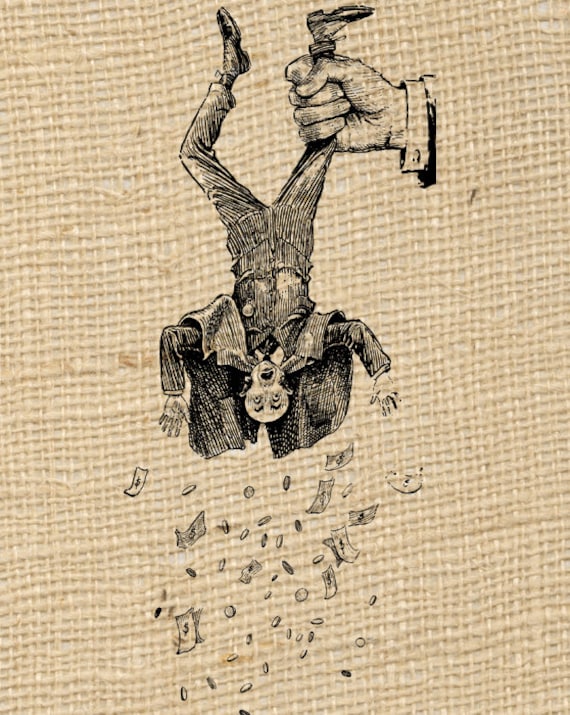
It's like Jesus takes Death by the feet, holds it upside down and shakes it stupid until it releases all of its captives. Jesus does for us what we can't do for ourselves—He conquers Death.
We all belong to our Creator Jesus, not Death. He made us for Himself.
Jesus truly is greater than Adam.
Sincerely,
Wes
P.S. Read Romans 5 and 1 Corinthians 15 to get a fuller view of the contrast between Adam and Jesus.
P.P.S. And if you don't yet know Jesus, read "What are the foundational truths of Jesus we must believe to realize our salvation?"
Subscribe to:
Posts (Atom)